


Friday, 27 February 2026 2 postdoctoral researcher positions in computer science are available
The University of Primorska Faculty of Mathematics, Natural Sciences and Information Technologies (UP FAMNIT) invites applications for 2 postdoctoral researcher positions in computer science. We welcome outstanding candidates with a strong research record in computer science who are motivated to develop independent research and to contribute to the preparation of competitive project proposals.

Position description
At UP FAMNIT, we offer a dynamic international research environment and encourage postdoctoral researchers to pursue independent, high-quality research, build collaborations, and contribute to the research profile of the faculty. Since this is an open call, the exact research topic and mentoring arrangements will be determined based on the candidate’s expertise and research plan, as well as alignment with the research strengths in computer science at UP FAMNIT, which include Human-Computer Interaction, Distributed Ledger (blockchain), Language Technologies, Mixed Reality, Recommender Systems, Distributed Systems and Graph Theory. A full list of computer science faculty members is available here.
A key expectation is that the successful candidate will be proactive in preparing and submitting competitive research proposals, in particular to:
• Marie Skłodowska-Curie Actions (MSCA) postdoctoral calls
• ERC Starting Grant
• Slovenian Research and Innovation Agency (ARIS) research project calls
The postdoctoral researcher is expected to:
• Develop and carry out an independent research programme leading to high-quality publications;
• Initiate and contribute to research proposals (MSCA, ERC, ARIS and other relevant schemes);
• Collaborate with UP FAMNIT researchers and engage in international scientific networks;
• Present results at seminars, conferences, and other dissemination activities;
• Teaching or delivering tutorials of one course per semester in selected core areas of computer science (such as programming, software development practices, computer systems and networks, data management etc).
Conditions
Duration: 2 years, with possible extension subject to funding and performance
Starting date: flexible; preferably by October 2026
Host institution: University of Primorska, Slovenia
Deadline for application: March 31st 2026
Requirements
• PhD in Computer Science or a closely related field;
• Strong research track record appropriate to career stage, evidenced by publications and research achievements;
• Demonstrated potential for scientific independence and leadership;
• Motivation and capability to prepare competitive research proposals (MSCA, ERC, ARIS);
• Excellent written and spoken English.
Employment terms
• Full-time employment, with contract conditions in line with Slovenian regulations;
• Salary and benefits according to Slovenian national postdoctoral salary scales (approximately 1900 EUR/month net);
• Support for research visits and conference participation.
How to apply
To apply, please email the following documents to razpisi.famnitiam@upr.si with the subject line:
“University of Primorska Postdoc – Computer Science 2026”
- Curriculum Vitae
- Publication list
- Research statement (including a short outline of a project idea, ideally aligned with the research work of UP FAMNIT faculty members)
- Copies of up to three recent papers (conference or journal)
- Names and e-mail addresses of two or three persons who can be contacted for reference (and who have agreed to be contacted)
Friday, 27 February 2026 T4EU SCIENCE CAFÉE: Anxious about mathematics? Is that even real?
HOST: University of Primorska, Faculty of Mathematics, Natural Sciences and Information Technologies (UP FAMNIT)
TOPIC: Anxious about mathematics? Is that even real?
DATE: Thursday, March 5, 2026, 17:00 – 18:30 CET
LOCATION: UP FAMNIT Lobby
The event will be broadcast live via T4EU’s YouTube.

DESCRIPTION:
Mathematical achievement and students’ career choices depend not only on the quality of teaching and their cognitive abilities, but also on their attitudes and emotional experiences. One of the most important of these is math anxiety, that is a feeling of tension, worry, or even fear that arises when dealing with numbers or mathematical tasks.
In this talk, we will explore what math anxiety is, how common it is, and how it manifests in everyday situations from the classroom to exams and real-life decision making. Understanding that this form of anxiety exists, and recognizing its impact, is the first step toward helping students cope with it and build more positive, confident relationships with mathematics.
Whether you are a teacher, a student, or simply someone who has ever thought “I’m just not a math person,” this talk aims to shed light on how emotions shape our engagement with mathematics - and what we can do about it.
Our guest at the Science Café will be Assoc. Prof. Krzysztof Cipora from Jagiellonian University in Krakow, Poland. The discussion will also feature students of Psychology and Biopsychology from UP FAMNIT.
About Assoc. Prof. Krzysztof Cipora
Krzysztof Cipora is an Associate Professor of Psychology at the Jagiellonian University in Kraków and co-leads the Mathematical Cognition and Learning Lab (MCLL). After completing his PhD at Jagiellonian University, he continued his research career as a postdoctoral researcher at the University of Tübingen in Germany and as a Senior Lecturer at the Centre for Mathematical Cognition at Loughborough University in the United Kingdom.
His research focuses on:
- basic numerical processing and its relationship to mathematical skills,
- math anxiety and its impact on performance across different groups,
- the influence of language and culture on cognition, as well as issues of open science and research reproducibility.
He is currently leading and collaborating on international projects investigating spatial-numerical cognition in mathematicians and strategies to reduce math anxiety among future teachers.
Dr. Cipora will take part in the Visiting Professorship programme within the framework of Transform4Europe (T4EU), an international initiative that brings leading scholars to partner universities to enrich teaching, research, and academic collaboration.
The programme goes beyond short-term mobility, supporting knowledge exchange, interdisciplinary cooperation, and joint engagement with key societal, digital, and environmental challenges across Europe.
Wednesday, 25 February 2026 Does everybody? Does anyone? Do they always? What inter- and intraindividual stability of cognitive effects can tell us about (numerical) cognition?
A seminar entitled Does everybody? Does anyone? Do they always? What inter- and intraindividual stability of cognitive effects can tell us about (numerical) cognition? will be held on 9 March at 11:00 am in the VP3 Lecture Room and ZOOM. The seminar will be delivered by Prof. Krzysztof Cipora.

Cognitive psychologists generalize a lot: not only from samples to the population, but also from group-level effects to believing that these effects are present and stable in all individuals. Such generalisations have important implications for theory building – most theories of cognitive / experimental psychology assume universality of observed phenomena. In this talk I will present work on individual prevalence of numerical cognition phenomena: the SNARC effect (various instances), the Numerical Distance Effect, the Size Effect, and the Unit-Decade Compatibility effect. Taken together, this work shows that even robust group-level effects can be driven by a minority of participants who reveal these effects above chance level.
The said effects differ with regards to individual prevalence and proportion of individuals revealing reliable reverse effects. Knowing whether an individual reveals a reliable effect or not based on results of a single session, one may wonder whether revealing a reliable effect is an individual characteristic, which is stable across time. We investigated this for the SNARC effect. In a subsequent study, participants performed the typical SNARC task for 30 days.
We observed massive intra-individual variation in SNARC and other effects that could be calculated from the parity judgment data. Taken together, these findings show that novel insights into experimental psychology can be obtained using differential psychology approach. Inter- and intra-individual stability may potentially be considered in theory building.
Prof. Cipora will take part in the Visiting Professorship programme within the framework of Transform4Europe (T4EU), an international initiative that brings leading scholars to partner universities to enrich teaching, research, and academic collaboration.
The programme goes beyond short-term mobility, supporting knowledge exchange, interdisciplinary cooperation, and joint engagement with key societal, digital, and environmental challenges across Europe.
Tuesday, 24 February 2026 RIN Seminar on Accessibility of Public Sector Websites and Mobile Apps
On 23 February, a Monday RIN seminar titled 'Accessibility of Public Sector Websites and Mobile Apps ' was held.

The seminar was led by Gašper Žuber, an advisor at the Slovenian Administrative Academy within the Ministry of Public Administration. He specializes in quality and accessibility in the public sector, monitors and promotes compliance with Slovenian accessibility laws based on international standards, and regularly presents on accessibility in public services.
In this presentation, Žuber explained why accessibility matters for all users, common pitfalls in creating accessible online content, and practical steps participants could take to make websites, mobile apps, and public documents more inclusive. The lecturer also shared insights on typical accessibility errors, such as missing alternative text for images, issues with keyboard navigation, and inaccessible PDF documents, and offered simple guidelines that could be applied to improve digital inclusion within organizations.
Friday, 20 February 2026 Invitation to a Workshop on Open Science
On Wednesday, 11 March, Assoc. Prof. Ana Slavec, PhD, from the Department of Applied Natural Sciences, will participate as a speaker at a Workshop on Open Science organized by UNG, which will be held in a hybrid format.
The workshop will be organized in two parts. The first part will present the Slovenian Open Science Community and its activities, while the second part will provide a brief overview of Open Science and Academic Publishing, including the Core Principles of Publishing Ethics and the role of Artificial Intelligence in Scholarly Publishing.
The workshop is also open to other participants.
All information is available HERE.
You are warmly invited!
Thursday, 19 February 2026 INVITATION TO PARTICIPATE - OPPORTUNITY FOR SABBATICAL IN THE ACADEMIC YEAR 2026/2027
Call conditions
Higher education teachers and researchers who meet the following conditions can apply:
- Have a valid appointment for a position of a higher education teacher or researcher, classified in the profile R2 (at least 3 years from the first election), R3 or R4 within the European Framework for Research Careers;
- Have an employment contract of indefinite duration for at least half of full-time employment at the UP;
- Have been employed by the UP continuously for the last 6 years prior to applying;
- They meet the conditions for the head of a research programme, in accordance with Article 5 of the Rules on Stable Funding of Scientific Research Activities of the University of Primorska (regardless of these provisions, they must be employed at least part-time).
Application content
Applicants must submit their application using Form 1 (Application for Sabbatical).
The application must contain:
- motivation letter (with contact details and researcher's signature),
- the proposed period of the Sabbatical (if the candidate requests a Sabbatical in the duration of one semester),
- opinion of the dean/director of the parent faculty/institute (with the signature of the dean/director),
- Sabbatical programme,
- a written invitation from the hosting organisation (signed by the hosting organisation), in case Sabbatical envisages hosting at another organisation
The Sabbatical programme referred to in the fourth indent of the preceding paragraph must contain:
- a description of the starting points and goals of the Sabbatical,
- a description of the content and the course, including the time and place of the Sabbatical activities,
- expected results,
- justification of the contribution to the progress of the researcher in the field of research, pedagogy and/or other areas of work,
- a description of the benefits of the programme for colleagues, students, faculty/institute and/or the UP, in particular, how the researcher will transfer the knowledge and experience gained after the end of the Sabbatical.
Applicants who meet the above conditions express their interest by submitting their application in electronic form (with digital signatures or scanned handwritten signatures) to the e-mail address: kadrovska@upr.si marked "Application to the internal call – Sabbatical". Deadline for applications is March 31, 2026, by 12 (noon).
You can find more information about the call here: Invitation to participate - oportunity for Sabbatical
Annexes:
Form 1 - Application for Sabbatical
Thursday, 19 February 2026 Mateja Erce Paoli, new Doctor of Science
Today, 19 February 2026, we welcomed another Doctor of Science at UP FAMNIT.
Mateja Erce Paoli, student of the doctoral study programe Renewable Materials for Healthy Built Environments (in Slovenian) at UP FAMNIT, has successfully defended a doctoral dissertation entitled Addressing psychosocial needs with building design to encourage healthy and active ageing; under the mentorship of Assoc. Prof. Michael David Burnard, PhD.
We sincerely congratulate the new Doctor of Science and wish her much success in her future research!

Tuesday, 17 February 2026 Dr. Kenny Bešter Štorgel is the first recipient of the Vidav Award
The committee composed of Prof. Dr. Sergio Cabello Justo, Prof. Dr. Aleksey Kostenko, and Prof. Dr. Marjeta Kramar-Fijavž has selected Dr. Kenny Bešter Štorgel, assistant with a PhD at UP FAMNIT, as the first recipient of the Ivan Vidav Award.
The new distinction for outstanding research achievements of early-career mathematicians who have carried out a significant part of their research at Slovenian institutions will, from this year onward, be awarded every three years by DMFA Slovenia. This year’s laureate will receive the award at the society’s general assembly on Tuesday, March 17, at the Faculty of Mathematics and Physics of the University of Ljubljana, where he will also present his research work.
 PhD in graph theory
In 2023, as a student of the doctoral study programme Mathematical Sciences at UP FAMNIT, Dr. Bešter Štorgel successfully defended his doctoral dissertation titled Certain Graph-Theoretic Invariants and Decompositions: From Structure to Bounds and Algorithms, supervised by Assoc. Prof. Dr. Borut Lužar and co-supervised by Prof. Dr. Martin Milanič.
During his doctoral studies, he was employed as a young researcher at the Faculty of Information Studies in Novo mesto. Prior to this, he also completed his undergraduate degree in Mathematics and his master’s degree in Mathematical Sciences at our faculty. He is currently employed at UP FAMNIT and at the Faculty of Information Studies in Novo mesto, where he teaches courses related to mathematics and computer science. His research interests include structural, algorithmic, and chromatic graph theory.
Congratulations!
Saturday, 14 February 2026 Successful Implementation of INFO DAYS in Koper and Izola
On Friday and Saturday, February 13 and 14, INFO DAYS for prospective students took place across Slovenia. At UP FAMNIT, we hosted our events at three locations this year and recorded significant interest in our undergraduate study programmes.
In Koper, at the faculty headquarters, students were welcomed by the Dean, Prof. dr. Ademir Hujdurović and Prof. dr. Elena Bužan, before the presentations began. Meanwhile, in Izola (Livade 1.0), where some study programs are conducted, students were greeted by Assoc. Prof. Živa Fišer, Head of the Department of Biodiversity, and Assoc. Prof. Alenka Baruca Arbeiter, Department of Applied Natural Sciences.
In Koper, prospective students received information about Mathematics, Mathematics in Economics and Finance, Computer Science, Mathematics and Computer Science and Biopsychology. In Izola, they were introduced to Bioinformatics, Agronomy, Wood Innovation for Sustainability and Conservation Biology.
After the presentations, attendees had the opportunity to visit FAMNIT’s information fair, where they met student tutors and Student Services.
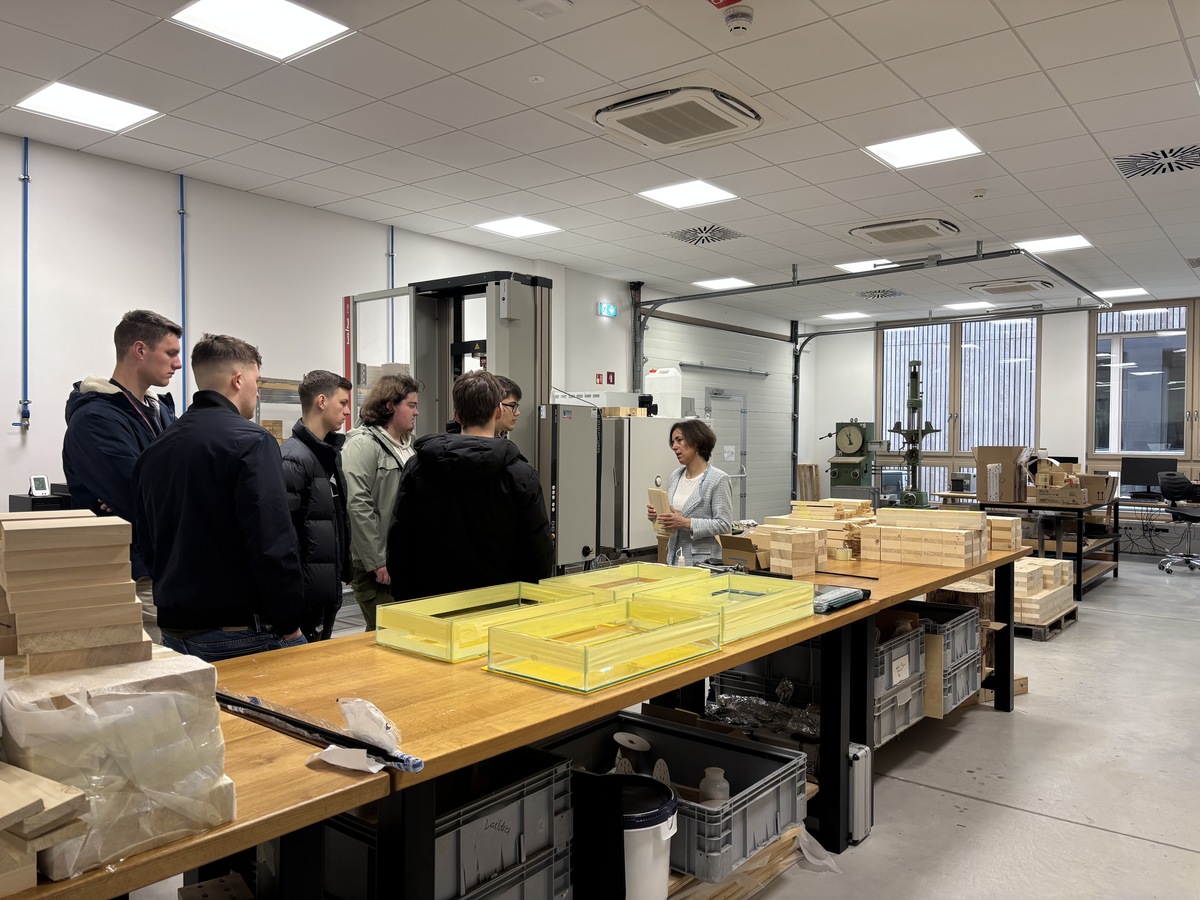
In Izola, prospective students were given tours of the laboratories and practice rooms equipped with high-end technology, primarily used for research in applied natural sciences, biodiversity, bioinformatics, food, nutrition, health, urban planning, ergonomics and kinesiology, olive growing, gastronomy and wine culture, Mediterranean studies, environmental technologies, and renewable material usage.
The Saturday afternoon session was dedicated to English-language presentations via ZOOM for international students interested in Mathematics, Computer Science, Mathematics and Computer Science, Wood Innovation for Sustainability and Bioinformatics study programmes, which are also offered in English at our faculty.
In addition to program content, multiple sessions via Zoom provided information about student housing and the application and enrolment process.
An additional online presentation on the application and enrolment process for undergraduate studies is scheduled for Wednesday, March 4, 2026, at 2:00 PM. Zoom link: https://upr-si.zoom.us/j/66000735094#success
For questions related to the application and enrolment process, students can contact the Student Services Office (vpis@upr.si) and the UP Admission Office (vpis@upr.si).



Thursday, 12 February 2026 The doctoral thesis defence of Mateja Erce Paoli
Mateja Erce Paoli, student of the doctoral study programe Renewable Materials for Healthy Built Environments (in Slovenian) at UP FAMNIT will defend her doctoral thesis Addressing psychosocial needs with building design to encourage healthy and active ageing; under the mentorship of Assoc. Prof. Michael David Burnard, PhD.
The defence will take place on Thursday, 19 February 2026 at 10:00 at the InnoRenew CoE, Livade 6a, Izola, classroom Sequoia.
The doctoral disertation is available in the University Library.
You are kindly invited!
Wednesday, 11 February 2026 International Day of Women and Girls - inspiring female researchers who lead citizen science projects UP
2026 International Day of Women and Girls in Science shifts the focus from recommendations and reflection to showcasing existing good practices and solutions for building more inclusive Science, Technology, Engineering and Mathematics (STEM) ecosystems with the slogan “From vision to impact: Redefining STEM by closing the gender gap« .
So this year, to mark February 11, International Day of Women and Girls in Science, at UP, we focused on researchers that tickle the topic of citizen science in STEM, especially in the field of biology. Citizen science means the active participation of the public in scientific research projects. The basic aim of citizen science is to offer every citizen the opportunity to actively participate in the various phases of the research process. By doing so, we encourage not only the broader public, but especially young girls and women to be actively involved and see their role in science as active and inspired future scientists.
CITIZEN SCIENCE PROJECTS AT UP
 REGALNICA – REGIONAL CENSUS OF THE EUROPEAN TREE FROG (Hyla arborea)
Assist. Prof. Martina Lužnik, Department of Biodiversity UP FAMNT
What is the main goal of REGalnica, and why is surveying the European tree frog important for Slovenia? And how do surveys such as REGALNICA contribute to the conservation of vulnerable species and their habitats?
There are two main goals: the first is to collect field data on the occurrence of the European tree frog (Hyla arborea) in ponds and other water bodies in south-western Slovenia; the second goal is to involve the public as much as possible so that awareness of endangered species, such as amphibians, can be effectively spread through first-hand field experience.
The European tree frog is a small but charismatic frog that is listed in Slovenia on the Red List of threatened amphibians, where it is defined as a vulnerable species. In south-western Slovenia, however, we had already noticed several years before the first REGALNICA that its occurrence was becoming increasingly rare, perhaps because its breeding sites – wetlands and ponds – are also disappearing. With this project, we want to obtain as reliable data as possible on its occurrence across a wide area – on the Karst, in Istria, in the Brkini and elsewhere. Until recently, on late spring evenings, we were used to loud croaking here, which could be heard from practically every pond or pool.
How does the project connect science, people and nature, and how do participants take part in data collection?
I think it is important that we are all aware of the biodiversity in our surroundings, meaning the diversity of species as well as their natural habitats. This is not something that is important only for scientists or conservationists, but is absolutely essential for everyone. By taking part in this project, participants do not only get to know the European tree frog, as they see, hear and experience much more than just a single species.
REGAlnica is organised so that on a selected evening in May, we gather at the Škocjan Caves Park, with which we have cooperated since the beginning of the project. There, we explain to participants how to reliably detect this species – male European tree frogs have a very characteristic and loud call, by which they can be recognised from a distance. All participants then head out at the same time for night fieldwork to predetermined locations – near ponds and other water bodies – and in a single night, we obtain data for just over one hundred locations. Of course, in the field they also encounter many other organisms – other amphibians call from the ponds, scops owls and other nocturnal birds sing nearby, and jackals often howl in the distance… The nocturnal soundscape is extremely interesting.
Four REGALNICA events have already been carried out, and the fifth will take place this May – what has surprised or impressed you most about the events so far? Are any new event's developments in sight?
The first thing that pleasantly surprised us was the strong response, as we had between 50 and 70 participants at each event. Many are students and biologists, which may be expected, but there are also many other participants, for example families with children and local residents who feel close to nature. It is also lovely to see participants return every year if they can. What makes us happiest is the participants’ enthusiasm. When they call us and report how many frogs they have already heard that evening or what else they have seen. This enthusiasm for nature is wonderful.
This year we are not yet planning major new developments, but in the coming years we would like to expand REGALNICA across the border to Croatia and perhaps also to Italy. It is important to understand what is happening to the populations of this species in this cross-border connected area.
What are the key findings so far that have emerged from the field data collection?
HOW TO JOIN THE CITIZENS' INITIATIVE "REGALNICA"?
SEARCH FOR NON-NATIVE FLATWORMS IN SLOVENIA
 Group of female researchers from the Department of Biodiversity, UP FAMNIT:
Answered by: Assoc. Prof. Živa Fišer, Head of the Biodiversity Department, UP FAMNIT
- Assist. Prof. Martina Lužnik
- Assist. Prof. Sara Zupan
- Assist. Prof. Katja Adam
What was the main reason you established and are developing a citizen science initiative?
The reason was entirely simple – one of us found an organism in her garden that she could not identify despite her biological knowledge. With the help of the internet, we discovered that they were flatworms, terrestrial planarians, which have no native representatives in Slovenia. A review of the literature showed that these organisms can in some places represent a considerable environmental problem, so it seemed sensible to try to find out more about them. Researching such poorly known and relatively inconspicuous species is extremely difficult, so the idea of doing this with the help of the public immediately came to mind.
What surprised you most in researching non-native flatworms?
I think we were most surprised that they are a fascinating group of animals. Although at first glance they are unattractive and often quite repulsive to people, their life cycle is incredible. They are capable of self-regeneration – if we cut them in half, a new individual grows from each half within a few weeks. Some species have the toxin tetrodotoxin, which they use for defence or to paralyse prey. This is the same toxin as that found in pufferfish or some tropical tree frogs.
What challenge do you most often face when involving the public?
The biggest challenge is reaching people and motivating them to join the research. It is easier if more attractive animals are involved, as people are then much more willing to take part and contribute more data. With organisms such as flatworms, however, we have to invest a great deal of effort in promoting the project. For this reason as well, the four researchers decided to join together as a team, divide the work, and try to obtain as much data as possible. We were very grateful to the magazines that were willing to publish an article about our search and thus expand the circle of recipients.
Why do you think this way of researching is particularly important today?
It is a misconception that in the past citizens did not participate in research; the term citizen science was simply not used at the time. However, this is one of the good ways to obtain a larger amount of data precisely for such more hidden species. We expect flatworms mainly in private gardens, indoor plant pots, and garden centres; these are places that researchers of course cannot freely enter and investigate, so the public is invaluable here.
HOW TO GET INVOLVED IN THE INITIATIVE “SEARCH FOR NON-NATIVE FLATWORMS IN SLOVENIA”?
If you have encountered flatworms from the turbellaria group while gardening or engaging in other activities, please do not touch them (you can lift them with sticks), record your observation (take a photo and, if possible, catch it), and report your find to: ploskicrvi@upr.si,, via the Facebook group “Tujerodni ploski črvi v Sloveniji”,the form > HERE, or by landline (05 663 58 07; on weekdays).
LOOKING FOR COWSLIPS
 Assoc. Prof. Dr. Živa Fišer, Head of the Department of Biodiversity, UP FAMNIT
What can an individual contribute to the project and to scientific research through simple observation?
Why is public participation in protecting endangered species so valuable?
What is the most important piece of information, lesson, or knowledge that people gain when they take part in this project?
What advice would you give to young people interested in botany or nature conservation?
To anyone interested in nature in any way – plants, animals, or other organisms – I recommend joining the iNaturalist platform. This is a global online platform through which we can upload photographs of species, whether from our local surroundings or from foreign, exotic places. With the help of a rapidly growing scientific and amateur community, we can obtain information on the platform about the species we have photographed, create a kind of list or album of our recorded species, and at the same time contribute invaluable data on species occurrences. Thanks to this platform, knowledge of many groups of organisms has improved greatly, and not only that – some lucky individuals have even captured in photographs species that were previously unknown to the community.HOW TO GET INVOLVED IN THE INITIATIVE “LOOKING FOR COWSLIPS”?
STEP CHANGE: SRNA APPLICATION FOR MONITORING WILDLIFE ANIMALS
 Prof. Dr. Elena Bužan, Department of Biodiversity UP FAMNIT
How does the SRNA project combine citizen participation, science, and wildlife conservation?
What do participants learn about wildlife species when collecting observations?
What was the most surprising or interesting aspect of the data collected by users?
What would you say to anyone thinking about joining the SRNA project for the first time?
HOW TO GE INVOLVED IN "STEP CHANGE: SRNA APPLICATION FOR MONITORING WILDLIFE ANIMALS"?
PROTECTION OF BRONZE MONUMENTS IN A CHANGING ENVIRONMENT
 Assoc. Prof.
 What led you to work with citizen science?
Why are photographs and observations by citizen researchers crucial for understanding bronze deterioration?
How does public participation contribute to the preservation of cultural heritage?
What message would you share on the International Day of Women and Girls in Science, with those considering a research career or participation in scientific projects?
HOW TO GET INVOLVED IN "PROTECTION OF BRONZE MONUMENTS IN A CHANGING ENVIRONMENT"?
Wednesday, 11 February 2026 130 years since the birth of a forgotten Slovenian mathematician
On February 11, 2026, a round table was held at UP FAMNIT in Koper to celebrate the release of the freely accessible electronic edition of the book The Life Path of Mathematics of Ivo Lah by Janez Mulec and the release of the commemorative postage stamp Ivo Lah – 130 years of birth, which was issued by Pošta Slovenije at the end of January.
The participants of the round table shed light on the life and work of Ivo Lah (1896–1979), a Slovenian mathematician, actuary, statistician and demographer, who with his work significantly marked the development of mathematical and actuarial sciences in the wider Central European area.
The work and, above all, the life of Ivo Lah was described in a book published at the end of 2023 by Janez Mulec the Elder. Prof. Dr. Tomaž Pisanski advocated that the University of Primorska also publish it in freely accessible electronic form.
The event was led by Dr. Simona Kustec, editor-in-chief of the University of Primorska Publishing House. The round table was attended by Dr. Janez Komelj, Dr. Tomaž Pisanski and Dr. Janez Mulec, who from different professional perspectives shed light on the significance of Lah's work and its influence on today's research in mathematics, actuarial science and statistics.
About Ivo Lah
Ivo Lah was born in 1896 in Štrukljeva vas and studied in Vienna and Zagreb. Early in his career, he established himself as one of the leading actuaries in the Balkans. Between 1937 and 1940, he published the first scientific journal with actuarial and mathematical content in Ljubljana, Glasnik Udruženja aktuara Kraljevine Jugoslavije, in which contributions were also published in the Slovene language, which made a significant contribution to the development of professional terminology.
In 1942 he published the first mortality tables, and after World War II the trilingual monograph Računske osnovnice životnog osiguranja (1947), which served as an expert basis for negotiations on war reparations; as a member of the Yugoslav state delegation, he participated in the negotiations in Rome. In 1954 he introduced numbers that were soon named after him – Lah numbers. These connect increasing and decreasing powers and, together with Stirling numbers, form an important structure in discrete mathematics. Although they originated in the context of actuarial research, they quickly found a place in modern mathematics and are still the subject of research today. Despite the scientific weight of his contributions, Ivo Lah was overlooked for many decades. It was only in 2002 that it became generally known that the author of Lah numbers was Slovenian. The mystery was solved by mathematicians Tomaž Pisanski and Marko Petkovšek. His professional and personal journey was also marked by post-war stigma, as he disagreed with the social order of the former Yugoslavia in many ways and was unjustly punished by losing his right to vote after the end of World War II.


Tuesday, 10 February 2026 UP part of the Slovenian Artificial Intelligence Factory
On 9 February 2026, the official launch of the Slovenian Artificial Intelligence Factory project – SLAIF (Slovenian AI Factory) took place in Ljubljana. The event, which brought together the highest representatives of the Government of the Republic of Slovenia, the European Commission, the SLAIF consortium, and the business sector, marked the beginning of one of Slovenia’s most important national initiatives in the field of artificial intelligence and high-performance computing.

The attendees were initially addressed by the Director of the Jožef Stefan Institute, Jure Cizelj, the Director of the Institute of Information Science (IZUM), Aleš Bošnjak, the Head of the Representation of the European Commission, Dr. Jerneja Jug Jerše, the Prime Minister of the Republic of Slovenia, Dr. Robert Golob , and the technical coordinator of the SLAIF project, Sašo Džerovski.
The new Slovenian Artificial Intelligence Factory (SLAIF), which is expected to replace the current EuroHPC Vega system in 2027, represents new infrastructure for artificial intelligence. The project’s technical coordinator, Sašo Džerovski, explains that in the 20th century countries built roads and electricity grids, while in the 21st century they must think about building infrastructure for artificial intelligence. With the SLAIF project, Slovenia will not only be a user of artificial intelligence but also an active contributor to European technological sovereignty and global competitiveness.
The purpose of SLAIF is to unify the artificial intelligence ecosystem through shared infrastructure and, through easy access, tailored support, and appropriate tools, connect academic, industrial, and public stakeholders, while also enabling use by small and medium-sized enterprises.
Prime Minister Dr. Robert Golob emphasized: “We must establish conditions for leveraging the knowledge of experts and transferring it into the economy. I see this as one of the greatest advantages of the new supercomputer and the artificial intelligence factory. The new supercomputer will not be intended only for scientists, but will also be accessible to others, with industry and the economy at the forefront.” The Prime Minister also mentioned that the government is considering access for citizens, which would establish a national generative artificial intelligence platform hosted within SLAIF.
About the project, in which the University of Primorska (UP) participates together with its member, the Faculty of Mathematics, Natural Sciences and Information Technologies (FAMNIT), the project leader, Prof. Dr. Marko Tkalčič, also spoke. Although he was not present on this occasion, he provided the following statement: “The most advanced forms of artificial intelligence today are no longer possible without high-performance computing infrastructure (HPC). Access to such infrastructure is usually limited to the largest global players. The SLAIF project reverses this logic: by establishing a national artificial intelligence factory (Slovenian AI Factory – SLAIF), it opens access to HPC-supported artificial intelligence to researchers, companies, startups, and public administration, while at the same time actively positioning itself within the European AI Factories and EuroHPC landscape. The key focus of the project is not only research, but also the systematic application of artificial intelligence running on supercomputing infrastructure. This will be implemented through training, user support, and concrete use cases. At the University of Primorska, we are proud that, as part of this consortium, we contribute to making HPC-supported artificial intelligence accessible and useful to the broader community, not only to the technological elite.” The event was attended on behalf of the University of Primorska by the Vice-Rector for Internationalisation, Prof. Dr. Michaël Mrissa, Prof. Dr. Jernej Vičič from UP FAMNIT, and UP FAMNIT student Nataša Miletić.
SLAIF services will address four key areas of the Slovenian economy: the green transition, health and biotechnology, the digital society, and artificial intelligence in science. Project results, which will be created in cooperation with research institutes, hospitals, small and medium-sized enterprises, and government bodies, will demonstrate impacts in areas such as precision agriculture, medical diagnostics, smart energy systems, and other scientific discoveries.
The SLAIF project, as part of an initiative that currently includes thirteen factories across Europe, is funded by the Republic of Slovenia (Ministry of Digital Transformation and Ministry of Higher Education, Science and Innovation), the EuroHPC Joint Undertaking, and the European Commission.
The SLAIF project coordinator is the Institute of Information Science. Partner institutions, in addition to the Faculty of Mathematics, Natural Sciences and Information Technologies of the University of Primorska, include the Jožef Stefan Institute, the Academic and Research Network of Slovenia, the Faculty of Computer and Information Science of the University of Ljubljana, the Faculty of Electrical Engineering, Computer Science and Informatics of the University of Maribor, the Faculty of Information Studies of the University of Novo Mesto, the University of Nova Gorica, the Chamber of Commerce and Industry of Slovenia, and the Ljubljana Technology Park.

Monday, 9 February 2026 Successfully Concluded Conference of the B-RIN and MARiNKA Projects
On Friday, 6 February 2026, the final conference of the B-RIN project (Development of Fundamental Computer Science and Informatics Content and Knowledge in Kindergartens and Primary Schools) and the MARiNKA project (Young People with Fundamental CS&I Knowledge are Creators of the Future) took place at the Faculty of Mathematics, Natural Sciences and Information Technologies of the University of Primorska (UP FAMNIT).

The event, which attracted 110 participants, brought together project partners from UP FAMNIT, the besedilo UP PEF, the Faculty of Computer and Information Science of the University of Ljubljana, as well as numerous education professionals from kindergartens and primary schools across Slovenia.
In the opening session, participants were welcomed by the Vice-Rector for Academic Affairs of the University of Primorska, Prof. Dr. Tina Štemberger, representatives of the Ministry of Education, and the head of both projects, Prof. Dr. Sonja Čotar Konrad . All speakers emphasized the importance of developing and implementing fundamental computer science and informatics (CS&I) content throughout the entire vertical of the education system. Prof. Dr. Sonja Čotar Konrad highlighted: “These are fundamental competences that every individual needs today, not only programmers. Over the three years of training, children have gained confidence and become more independent in classroom work. An important contribution of the project is also the learning community we created together. We overcame challenges collectively, which strengthened our collaboration. Such a learning community ensures the sustainability of the project and supports further development of schools and kindergartens in other areas as well.”
The conference began with two keynote lectures.Prof. Dr. Tim Bell from the University of Canterbury (Aotearoa, New Zealand) highlighted the concept of computational thinking, which is increasingly being included in national curricula. He focused particularly on how computational thinking can be introduced to younger learners in a meaningful and accessible way, emphasizing the Computer Science Unplugged approach and its connection to programming and the broader understanding of computer science.
Children Need More Knowledge About How Artificial Intelligence Works
The conference began with two keynote lectures. Prof. Dr. Tim Bell from the University of Canterbury (Aotearoa, New Zealand) highlighted the concept of computational thinking, which is increasingly being included in national curricula. He focused particularly on how computational thinking can be introduced to younger learners in a meaningful and accessible way, emphasizing the Computer Science Unplugged approach and its connection to programming and the broader understanding of computer science.
The second keynote lecture, titled Human at the Centre: Technology and the Future of Education, was delivered by Prof. Dr. Ernest Ženko (UP FHŠ). He emphasized that technology in education is not a neutral tool, but a factor that reshapes how we learn, teach, and understand the world. He stated: “Decades ago, computer science education focused on understanding the basics of technology, programming knowledge, and algorithmic thinking – meaning the ability to transfer real problems into a way of thinking that enables solving them. This is something today’s generations often lack. For example, research from the United Kingdom has shown that many teenagers believe artificial intelligence actually thinks. Such misconceptions would not occur if students had more knowledge already in primary school. These topics help children understand the world they live in – for example, how systems that suggest friends on social networks work or how systems collect their data.”
This was followed by presentations of interim evaluations of both projects. Associate Prof. Dr. Mirko Prosen and Associate Prof. Dr. Sabina Ličen presented interim results of the B-RIN project evaluation, conducted over two consecutive school years (2023/24 and 2024/25). The mixed-method evaluation showed positive effects on children’s learning, the professional development of teachers and educators, and progress in understanding fundamental CS&I content, while also identifying implementation challenges.
The interim evaluation report of the MARiNKA project was presented by Prof. Dr. Tina Štemberger, who emphasized that the project is progressing according to planned goals and timeline. Key achievements include establishing development groups in schools, creating innovative learning environments through teaching scenarios, active student involvement, systematic quality monitoring, and professional training for project participants.
Good Practice Examples from Kindergartens and Primary Schools Across Slovenia
The afternoon programme focused on presentations of good practice examples from participating kindergartens and primary schools. In kindergartens, fundamental computer science concepts were introduced through the Computer Science Unplugged approach, meaning learning computational thinking processes through play, movement, cooking, and other activities. The principal of Koper Kindergarten, Alenka Rušt, highlighted: “Within the project, we introduced children to a more demanding topic for the preschool period – password safety and the importance of protecting personal data. We wanted to gradually prepare them for the risks of modern digital environments, as we observe that children already use digital devices extensively in kindergarten. Together with colleagues, we prepared an engaging and developmentally appropriate game based on a story about a girl who loses her teddy bear because she reveals her password. We are pleased that we can present even complex topics to children in a way they understand.”
An example of good practice in teaching programming was presented by Dr. Josip Plemlj Primary School Bled . Students learned programming basics using LEGO bricks and animation in the Stop Motion program. Aleksandra Frelih explained: “This was a winning example for us. The children were enthusiastic about the activity. We focused on understanding algorithms and wanted students to understand the entire video creation process – from the first to the final step. They learned that there is a sequence of steps that must be followed and learned to recognize where mistakes can occur.”
Looking to the Future
The success of the B-RIN and MARiNKA projects is also acknowledged by Radovan Kranjc, advisor at the National Education Institute of Slovenia, who announced a new development for seventh-grade students: “We are following what is planned in the school system. We know that in 2028, a new subject, Informatics and Digital Technologies, will be introduced. We are currently preparing guidelines for the national curriculum commission and considering which content should be included in this subject, which will unfortunately only have 35 hours. That means one hour per week in one school year, when all seventh-grade students will be introduced to at least some essential content from computer science and informatics.”
The conference concluded with final reflections emphasizing the importance of connecting research, pedagogy, and practice, as well as the long-term vision for the development of computer science and informatics education in Slovenia. The final conference confirmed that the B-RIN and MARiNKA projects represent an important step toward systematic, high-quality, student-centered teaching of fundamental CS&I content.
Consortium partners of the B-RIN project include: Vrtec Mavrica Brežice, Vrtec Jelka, Vrtec Koper, OŠ in vrtec Ankaran, OŠ Solkan and Vrtec Solkan, OŠ heroja Janeza Hribarja Stari trg pri Ložu and Vrtec Polhek, OŠ Frana Erjavca Nova Gorica, OŠ Frana Kocbeka Gornji Grad, OŠ Oskarja Kovačiča Škofije, and OŠ Vojke Šmuc Izola.
Consortium partners of the MARiNKA project include: UL Faculty of Computer and Information Science, OŠ Trzin, OŠ Prežihovega Voranca Ljubljana, OŠ dr. Josipa Plemlja Bled, OŠ 8 talcev Logatec, OŠ Staneta Žagarja Kranj, OŠ n. h. Maksa Pečarja, OŠ Vojke Šmuc Izola, OŠ Frana Erjavca Nova Gorica, OŠ Janeza Puharja Kranj, and OŠ Elvire Vatovec Prade.

Monday, 9 February 2026 Open Call for Awards and Recognitions of the Alumni UP in 2026
The Alumni Club of the University of Primorska (hereinafter Alumni UP) is a network of Alumni Clubs of individual faculties of the University of Primorska, whose purpose is to maintain contact with and among alumni, to organize educational, scientific, and other professional events, to support excellence in research, and to strengthen the identity and sense of belonging of the University of Primorska graduate community.

You can find more information about the operation of Alumni UP, membership, activities, and member benefits on the website: https://www.upr.si/si/up--okolje/alumni-up/.
The University of Primorska issues an Open call for awards and recognitions of the Alumni UP club to strengthen the identity and sense of belonging of the Alumni UP community.
TYPES OF AWARDS AND RECOGNITIONS
Alumni UP Award for Excellence
The Alumni UP Award for Excellence is awarded to a graduate of the University of Primorska (hereinafter UP), a member of the Alumni UP, for outstanding career achievements, exceptional philanthropic activity, or achievements in the cultural or sporting fields, or if the candidate has otherwise distinguished himself/herself as a leader or role model in one or more areas of activity. In all cases mentioned, the candidate has contributed to the reputation and visibility of UP through their work and achievements.
Alumni UP Award for outstanding achievements in the professional field
The UP Alumni Award for Outstanding Professional Achievement is awarded to a UP graduate, a member of the UP Alumni, who has achieved outstanding success in their professional community and/or has made a significant contribution to the development of the profession through their work. The candidate has contributed to the reputation and visibility of UP through their work and achievements.
Alumni UP Award "Young UP"
The UP Alumni Award "Young UP" is awarded to a UP graduate, a member of the UP Alumni, who has completed their studies at UP within the past five (5) years and has demonstrated particular excellence in their professional field and/or dedication to community service, public service, or philanthropy, and who has achieved significant career, scientific research, or other professional accomplishments during this period. The candidate has contributed to the reputation and visibility of UP through their work and achievements.
"Patron of Alumni UP" recognition
The "Patron of Alumni UP" award is given to a supporter of Alumni UP for a significant contribution to the development and activities of the Alumni UP community. The award is not linked to membership in Alumni UP and may be awarded to legal entities or individuals.
PROCEDURE FOR SUBMITTING NOMINATIONS AND CONDITIONS FOR AWARDING THE RECOGNITIONS
Candidates for awards may be proposed by:
- Alumni UP bodies,
- a member or a group of members of Alumni UP.
On behalf of a group of members, the proposal should be submitted by a representative of the group.
Candidates for recognitions may be proposed by:
- Alumni UP bodies,
- a member or a group of members of Alumni UP,
- the deans of UP faculties, the directors of UP members, and UP management.
On behalf of a group of members, the proposal should be submitted by a representative of the group.
An individual may not nominate himself/ herself. The President of the UP Alumni, as a voting member of the Commission, cannot propose candidates. Voting members of the Commission cannot propose candidates in the year of the award.
Candidates for the awards must meet the following conditions:
- have completed a postgraduate or undergraduate degree at UP or an advanced study program at UP and
- membership of the Alumni UP.
How to submit your proposal: via the e-form, which is available HERE .
The following information must be entered in the e-form:
- type of award or recognition,
- the first name, last name, and email address of the proposer or group representative,
- the first name, last name, and email address of the award nominee,
- the name of the organisation and the first name and last name of the person responsible in the case of a candidate for a recognition,
- A justification of the proposal stating the reason for nominating the candidate (up to 450 words), a brief description of the candidate's achievements.
Please support the justification submitted via the online form with:
- relevant supporting documents (e.g. recommendations, list of published works, or other documents that demonstrate the candidate's achievements and contributions) and
- the nominee’s consent (consent HERE ), which you should send to the email address: alumni@upr.si.
Deadline for submission of proposals: 8 March 2026
Deadline for selection of candidates: 22 March 2026
SELECTION PROCEDURE
The Selection Committee for awards and recognitions (hereinafter: the Committee), appointed by the Rector on the proposal of UP members, reviews and considers all proposals for awards and recognitions received within the call for applications. If the Committee finds that a proposal for an award or recognition is formally incomplete or inadequately drafted, it shall invite the proposer to complete the documentation within three (3) days.
The Committee shall adopt the Criteria for the Selection of the Recipients of the Alumni UP Awards and Recognitions at the time of the annual public call for applications. The Committee may request an additional opinion from a relevant expert in the field, employed at UP, or from a practitioner.
The Committee reserves the right to change the type of award, with the agreement of the candidate, if it considers that another type of award or recognition, as defined in Article 2 of these Regulations, is more appropriate for the proposed candidate. The Committee shall forward the selection of candidates for the awards and recognitions to the Rector of UP for approval.
AWARDING
Awards and recognitions shall be awarded once a year. Alumni UP may award a maximum of one award of each type and up to three recognitions per year. Exceptionally, in a given year, no specific award or recognition may be awarded, or fewer than the specified number of awards and recognitions, if no proposals are submitted or if the submitted proposals do not meet the requirements. Individuals or legal entities may receive an award or recognition only once for the same category.
The awards and recognitions will be presented by the President of Alumni UP at the main event of Alumni UP Week in 2026. The award ceremony will take place on 17 April 2026 at the premises of the University of Primorska in Koper.
More information:
ALUMNI PISARNA UP
E-naslov: alumni@upr.si
Monday, 9 February 2026 Public Call for Applications for Scholarships 2026/2027
The University of Primorska invites all students of the following faculties: UP Faculty of Humanities, UP Faculty of Management, UP Faculty of Mathematics, Natural Sciences and Information Technologies, UP Faculty of Education, UP Faculty of Tourism Studies - Turistica, UP Faculty of Health Sciences, who are eligible, to apply for the Public call to obtain scholarships from the Scholarship Fund of University of Primorska in the academic year 2026/2027.
The Scholarship Fund of the University of Primorska is based on a partnership between the University of Primorska, municipalities, and the private sector. It aims to reward and encourage the best students of UP, offer their knowledge to potential employers during the course of their study process, and provide opportunities for employment to these students as soon as they finish their studies. The objective of the Fund is at the same time to support all UP students in achieving the best possible results in their studies.
With this Public Call, the University of Primorska invites all:
- candidates for enrolment in the 1st, 2nd, or 3rd cycle study programmes of UP and
- students who, in the academic year of 2026/2027, will be enrolled in the 1st, 2nd, or 3rd cycle study programmes of UP
- to apply for this public call, and thus express their interest in joining the Fund.
The amount of the scholarship for the academic year 2026/2027 is at least 2.200,00 EUR.
In the case when the scholarships are awarded via UP, the scholarship amount is 2.200,00 EUR per academic year. In certain cases, a higher scholarship can also be awarded, namely:
- for students enrolled in the 1st and 2nd cycle, who score from 80 to 89 points, the scholarship can be as high as 330,00 EU per month, respectively as high as 3.300,00 EU per academic year;
- for students enrolled in the 1st and 2nd cycle, who score from 90 to 100 points, the scholarship can be as high as 550,00 EU per month, respectively as high as 5.500,00 EU per academic year;
- for students enrolled in the 3rd cycle, the scholarship can be as high as 1.200,00 EU per month, respectively as high as 12.000,00 EU per academic year.
Scholarship contracts will be concluded between UP, Fund partners (employers), and students with whom there is a mutual interest in the conclusion of the contract. By signing the scholarship contract, the student agrees that in the case that they are offered employment by a partner of the fund (employer) they will accept the offer and, after completing their studies, work for the partner of the fund for at least as long as they received the scholarship.
Application deadline: September 15th, 2026. The application is submitted in due time if it is submitted between 6th of February 2026 to September 15th, 2026.
On the website of the Career Center of the University of Primorska (KC UP) you will find all details and the public call: UP Scholarship Fund 2026/2027 - PUBLIC CALL
Contacts:
Career Center of University of Primorska
Address: Titov trg 4, 6000 Koper, Slovenija
Phone: +386 5 611 75 60
E-mail: kariernicenter@upr.si.
Public call UP Scholarship Fund - 2026/2027
Monday, 9 February 2026 The video of the first FAMNIT excursion into the mathematical universe is now available
The 1st lecture in the series titled ‘The Role of Dice in World Domination – A Case Study of Risk: The Board Game was delivered by Balázs Dávid.
Board games have been an integral part of human history across cultures and societies, and the theory and strategies of traditional games such as Chess and Go have long been studied and analyzed. In this talk, we explored the mathematical mechanics behind a much more recent — though a classic by modern standards — board game: Risk. We showcased how game states can be represented and how transitions between these states can be described with the help of probability theory, more specifically, Markov chains.
Balázs Dávid received his PhD in computer science in 2018 at the University of Szeged, Hungary. His research areas include combinatorial optimization, mathematical programming and algorithm development, particularly in public transport and logistics. His main research interest is the modelling and optimization of problems that are motivated by real-life industrial application. He is currently an assistant professor at InnoRenew CoE, UP IAM and UP FAMNIT.
Friday, 6 February 2026 CALL FOR STUDENT TUTORS
Dear UP students, We invite you to (re)apply to become tutors.
For this purpose, we are announcing places for:
- tutors,
- tutors for foreign students
Student tutoring is intended primarily for first-year students in a new living and educational environment. Tutors help them with important information and integration into the new environment.
Tutors for foreign students support newcomers who come to UP for exchange or full-time study. Tutors help them integrate into the new environment and with administrative and language barriers.
Tutors for students with special needs enable students to adapt more quickly and integrate successfully into the student environment and study.
You can apply, and the motivational letter can be uploaded to the application form: »tutor application«
The Call for tutors can be found here. Introductory training is organized in November and May.
The organization and operation of the tutoring system is governed by the Rules on the Tutoring System at the University of Primorska.
Students can also apply using the Application Form. The completed form, together with a letter of motivation, should be submitted to the student office of the home faculty.
Student tutors must submit a Report on Work Performed to the faculty student tutor coordinator by September 30. The work report is the basis for obtaining ECTS credits and a certificate. In November, student tutors are awarded recognition for their work in the previous academic year.
Friday, 6 February 2026 Lei Han, new Doctor of Science
Lei Han, student of the doctoral study programe Renewable Materials for Healthy Built Environments (in English) at UP FAMNIT, has successfully defended his doctoral thesis Viscoelastic properties of thermo-hydro-mechanically (THM) densfied wood Viscoelastic properties of thermo-hydro-mechanically (THM) densfied wood; under the mentorship of Prof. Andreja Kutnar, PhD and co-mentorship of Prof. Dick Sanberg, PhD.
We sincerely congratulate the new Doctor of Science and wish him much success in his future research!

Friday, 6 February 2026 Notice: Support for ERC Starting Grant Applications
UP FAMNIT and UP IAM have successfully conducted an internal call for proposals to support researchers in preparing and submitting applications for the ERC Starting Grant, which was announced on 17 November 2025.
A total of 9 applications were received under the call.
The applicants (listed in alphabetical order) are:
- Mohammad Derikvand - Self-healing of micro-cracks in timber structures
- Blas Fernández - Investigation, Discovery, and Exploration of Distance-Biregular Graphs
- Tilen Genov - Model-Informed Research for Rare and Overlooked Species
- Pascal Golin - Graph induced minor structure theory through the lens of coarse graph theory
- Giusy Monzillo - Synchronization and separation: From finite automata to association schemes
- Aleksander Simonič - Explicit zero density estimates for L-functions
- Ana Slavec - Citizen Science as a Driver for Advancing Statistical Literacy
- Aleksandar Tošić - The Artificial Mirror of Society for Scientific Understanding and Forecasting
- Maheshya Weerasighe - Adaptive Multi-Route Memory Scaffolding for Cognitive Resilience in Extended Reality
All applications were complete and submitted on time. The applications were reviewed and evaluated by an internal expert committee. Based on a substantive assessment of research excellence, the applicants’ potential, and the quality of the proposed research projects, the committee adopted the following decision:
- 6 applications were awarded a grade A (excellent potential) and are eligible for co-funding in the amount of EUR 5,000;
- 3 applications were awarded a grade B (very good potential) and are eligible for co-funding in the amount of EUR 2,000.
We congratulate the selected applicants and wish them every success in the ERC Starting Grant call.
Thursday, 5 February 2026 Aljaž Kosmač, new Doctor of Science
Today, 5 February 2026, we welcomed another Doctor of Science at UP FAMNIT.
Aljaž Kosmač, student of the doctoral study programe Mathematical Sciences (in Slovene) at UP FAMNIT, has successfully defended his doctoral thesis On smooth spline spaces and isogeometric methods for solving high-order partial differential equations over multi-patch domains; under the mentorship of Prof. Vito Vitrih, PhD.
We sincerely congratulate the new Doctor of Science and wish him much success in his future research!


Wednesday, 4 February 2026 UNDERGRADUATE STUDY: Course schedules for Spring Semester 2025/26
We would like to inform you that the course schedules for all study programmes for the Spring Semester 2025/26 are published on our website (https://www.famnit.upr.si//en/student-pages/timetables). Lectures start on Monday, 16 February 2026 and last until Friday, 29 May 2026.
On this website you can also find a short clip that will show you how to check the course schedule.
Important information about the course schedule:
- Please check all weeks in the schedule, because weekly schedules can differ.
- The schedule might change until Friday, 13 February. Please check the schedule again before the beginning of the academic year. All changes from Monday, 16 February will be published in the Notices (ŠIS, section Notices). We would like to emphasize that from 16 February 2026 Student Services will publish the notice about the change only for changes on the same day and the following 2 days.
- In some undergraduate courses, students are divided into groups for laboratory work. Students will receive the information about the group on their student university e-mail no later than Friday, 13 February.
We would like to inform you:
- BP2, BP3: the course Psychology Practicum is not on the course schedule; students will be informed later,
- BP2, BP3: the course Selected Biopsychological Topics in the English Language is not on the course schedule; students will be informed later,
- BP1: The lecturer for the Seminars for the course Neurological Bases of Higher Nervous Functions I will be announced at a later date.
Student Services UP FAMNIT
Wednesday, 4 February 2026 POSTGRADUATE STUDY: Course schedules for Spring Semester 2025/26
We would like to inform you that the course schedules for all study programmes for the Spring Semester 2025/26 are published on our website (https://www.famnit.upr.si//en/student-pages/timetables). Lectures start on Monday, 16 February 2026 and last until Friday, 29 May 2026.
On this website you can also find a short clip that will show you how to check the course schedule.
Important information about the course schedule:
- Please check the schedule for every week, because weekly schedules can differ.
- The schedule might change until Friday, 13 February. Please check the schedule again before the beginning of the academic year. All changes from Monday, 16 February will be published in the Notices (ŠIS, section Notices). We would like to emphasize that from 16 February 2026 Student Services will publish the notice about the change only for changes on the same day and the following 2 days.
Student Services UP FAMNIT
Tuesday, 3 February 2026 Invitation – Alpine Europe Summer School 2026 in Slovenia
From June 15 to 28, 2026, the University of Primorska will host the 4th edition of the Alpine Europe: Innovation in the Circular Economy Summer School, taking place in Slovenia.

The Summer School will be conducted in English in the forested environment of Slovenia and led by an international team from Europe and the USA. Through lectures, field visits and practical examples, participants will explore the entire wood value chain, learn about the circular economy and discover the principles of the New European Bauhaus. The programme also includes a visit to InnoRenew CoE, the largest timber building in Slovenia, showcasing modern wood construction. The Summer School is accredited in both the USA and Europe.
Alpine Europe leaders include Dr. Andreja Kutnar, Dr. Matthew Schwarzkopf and Dr. Mohammad Derikvand, InnoRenew CoE, UP IAM researchers, together with Professor Eric Hansen from Oregon State University.
The Alpine Europe Summer School offers hands-on learning, direct interaction with leading academics and professionals and a unique chance to experience sustainable construction in a real-world European setting.
The programme is organised by the Faculty of Mathematics, Natural Sciences and Information Technologies (UP FAMNIT), the Andrej Marušič Institute (UP IAM) and the NEBAP Hub, in close collaboration with Oregon State University.
Read more about the summer school here.
View the programme here.
Register here.
Tuesday, 3 February 2026 Lea Primožič, new Doctor of Science
Today, 3 February 2026, we welcomed another Doctor of Science at UP FAMNIT.
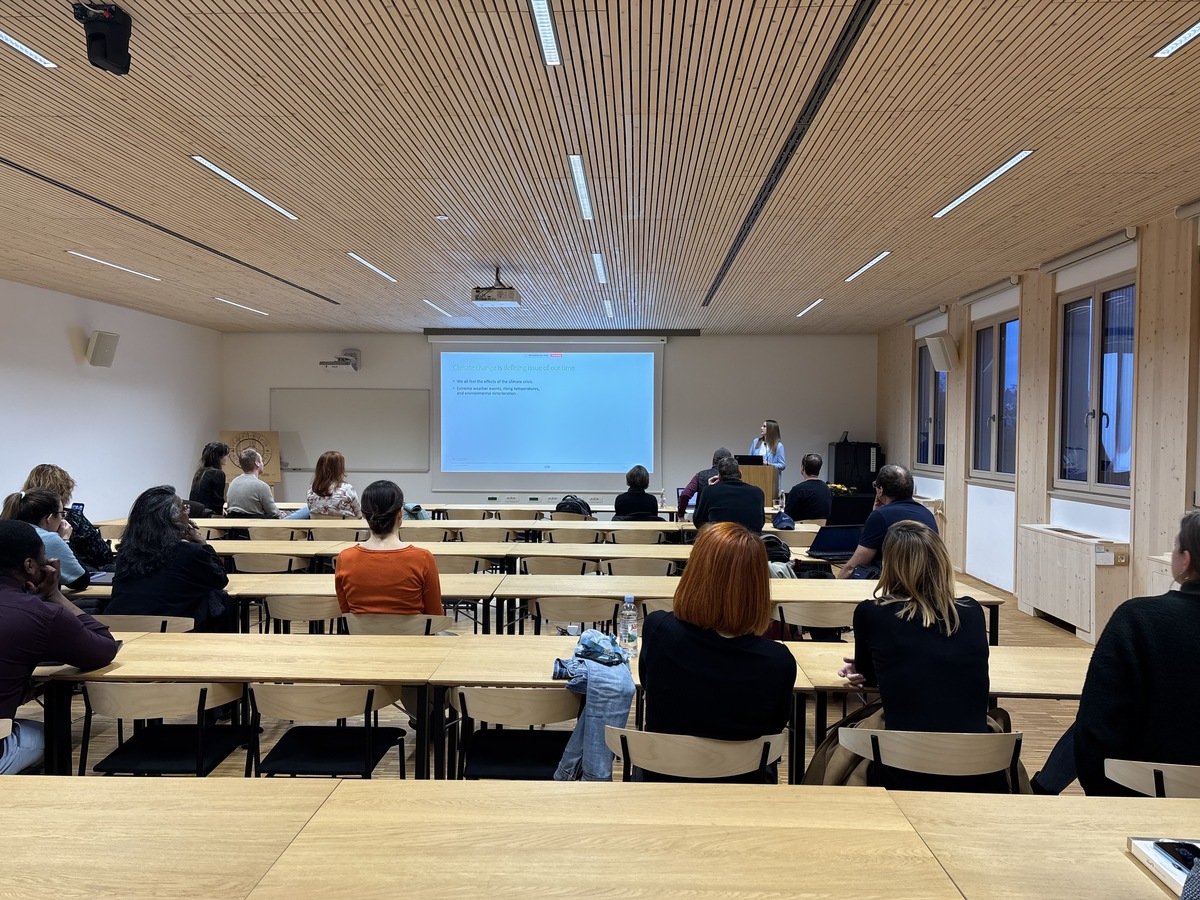
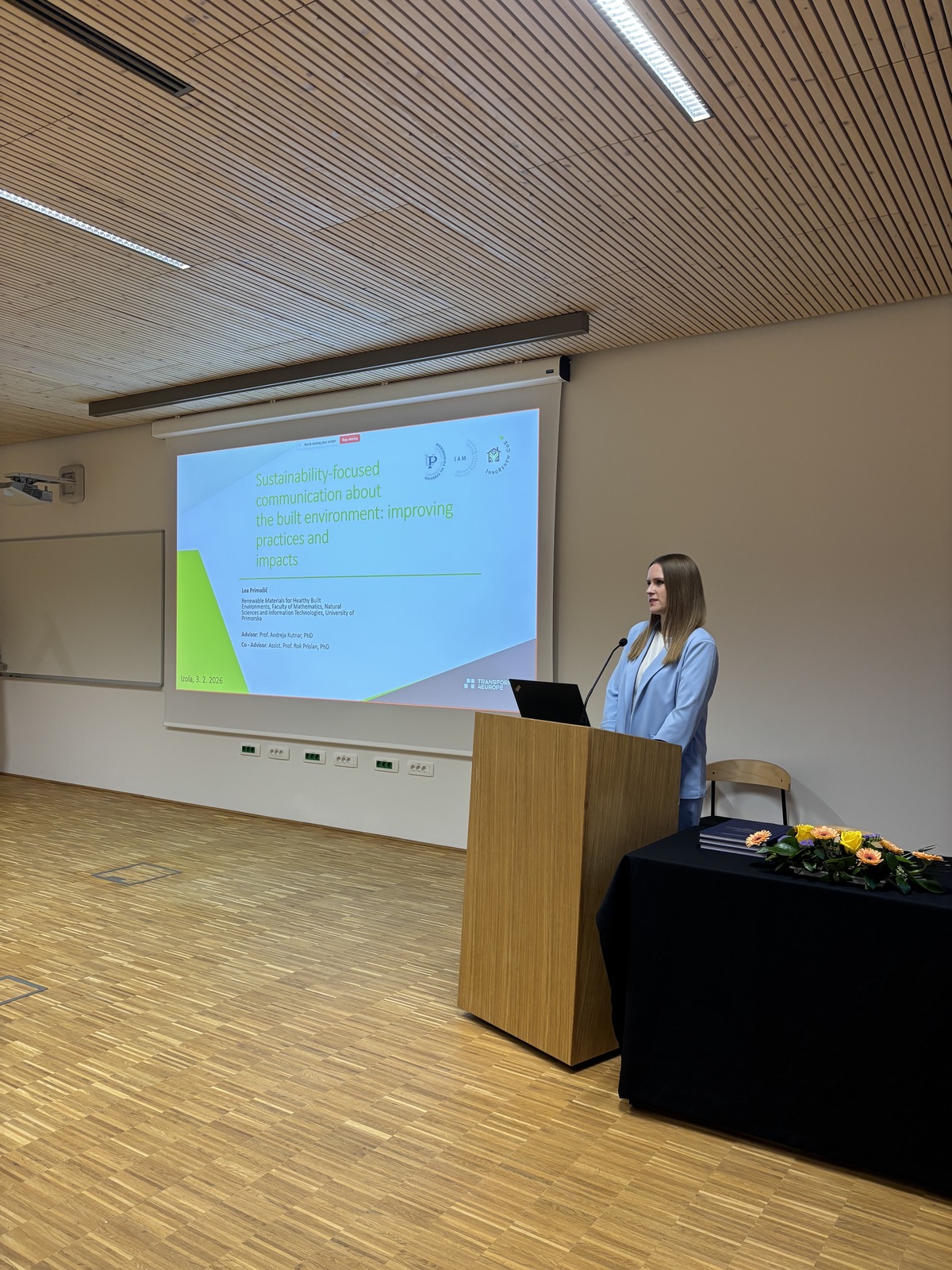
Lea Primožič, a student of the doctoral study program Renewable Materials for Healthy Built Environments (in English) of the Faculty of Mathematics, Natural Sciences and Information Technologies of the University of Primorska (UP FAMNIT), has successfully defended a doctoral dissertation entitled Sustainability-focused communication about the built environment: improving practices and impacts (Komuniciranje o grajenem okolju, usmerjeno v trajnostni razvoj: izboljšanje praks in učinkov), under the mentorship of Prof. Andreja Kutnar, PhD and co-mentorship of Assist. Prof. Rok Prislan, PhD.
We sincerely congratulate the new Doctor of Science and wish her much success in her future research!
Monday, 2 February 2026 Call for enrolment in undergraduate study programmes and unified master's study programmes of the University of Primorska in the academic year 2026/2027
In the framework of the Call for Enrolment in undergraduate and unified master's study programmes in the academic year 2026/2027, the University of Primorska announces the following free enrolment places for 33 undergraduate study programmes (8 higher professional and 25 academic study programmes) and 1 unified master's study programme:
- 1.691 enrolment places for Slovenian citizens and EU citizens, of which 1.351 are for full-time study and 340 for part-time study,
- 87 enrolment places for Slovenians abroad, of which 69 are for full-time and 18 for part-time study,
- 267 enrolment places for citizens of Western Balkans countries, with which the Republic of Slovenia has a bilateral agreement in the field of education (Bosnia and Herzegovina, Montenegro, Kosovo, Serbia, North Macedonia), of which 240 are for full-time and 27 for part-time study,
- 88 enrolment places for foreign citizens of non EU countries, of which 74 are for full-time and 14 for part-time study.
For the 1st year of study, there are also 110 enrolment places for candidates for parallel studies.
|
The Call of Enrolment is available at >>this LINK<< |
The application for enrolment is entirely electronic on the eVŠ web portal. The candidate submits the application with a means of electronic identification of at least a medium level of reliability (with a qualified digital certificate, smsPASS, e-identity card) or with an AAI account (account of the authentication and authorization infrastructure) or with a username and password via the system SI-PASS, which operates within the framework of the Trust Service Authority of Slovenia.
Each candidate can submit one application for enrolment, where they select a maximum of three study programmes in the order of priority, in which they wish to enrol and for which they meet or will meet the conditions for enrolment by the deadline. The order of the selected study programmes is important, as the candidate will be ranked in the first study programme for which they will meet all the conditions.
The first application period for enrolment will be:
- for Slovenian citizens, citizens of the EU Member States and Slovenians abroad from 18 February to 18 March 2026,
- for foreign citizens from non EU countries from 18 February to 30 June 2026.
What’s new in the call 2026/2027?
- The Call includes four new study programmes:
- Wood Innovation for Sustainability, professional study programme (UP FAMNIT),
- Mathematics and Computer Science, academic study programme (UP FAMNIT),
