


Friday, 28 November 2025 UP International Office successfully organized the first International Tuesday
On Tuesday, 25 November, the International Office of the University of Primorska held its very first International Tuesday event for students – a quiz night. The event gathered 45 students from all UP faculties.
Students had the chance to test their general knowledge and win a prize. During the breaks, representatives of the UP International Office shared useful information about Erasmus+ study exchanges and traineeships, opportunities offered through T4EU, as well as traineeship options within EU institutions.
Students got information about the new elective course, Study Without Borders, which will be available in the second semester. Covering topics such as intercultural communication, psychological support and the application process, the course is designed to help students prepare for an international exchange.
International Tuesday is a series of events created to promote international exchanges and strengthen connections among UP students.
Registrations for the International Tuesday planned on December 16, at 7 pm, are already open. Register here!

Thursday, 27 November 2025 Constitution of the UP FAMNIT Student Council in the 2025/2026 Academic Year
The following students have been elected to the UP FAMNIT Student Council for the 2025/2026 academic year, which consists of 11 members (listed in alphabetical order by surname):
Undergraduate Studies (9):
- Matic Bončina, Computer Science (Slovene track),
- Vladimir Bondarev, Mathematics (English track),
- Anđela Bošnjak, Biopsychology,
- Ilija Chrchev, Computer Science (English track),
- Miloš Jakovljević, Bioinformatics (English track),
- Andrej Korošec, Bioinformatics (Slovene track),
- Makar Korshunov, Mediterranean Agriculture,
- Aljaž Kunstelj, Computer Science (Slovene track),
- Artem Nesterov, Mathematics (English track);
Postgraduate Studies (2):
- Jakob Beber, Computer Science, Master's study programme,
- Lina Mešič, Computer Science, Master's study programme.
On Wednesday, 26 November 2025, the constitutive meeting of the new UP FAMNIT Student Council took place, at which the president, vice-president, secretary, and the student representatives in the UP Student Council and the UP Senate were elected. The elected members are:
- Matic Bončina, Computer Science (Slovene track) – President of the UP FAMNIT Student Council, student representative in the UP Student Council (by position), and student representative in the UP Senate,
- Aljaž Kunstelj, Computer Science (Slovene track) – Vice-President of the UP FAMNIT Student Council,
- Artem Nesterov, Mathematics (English track) – Secretary of the UP FAMNIT Student Council and student representative in the UP Student Council.
Congratulations to the members of the Student Council on their election, and we wish them much success in their work!
Wednesday, 26 November 2025 Presentation of the topic of the doctoral dissertation of Domen Vake
We invite you to the presentation of the topic of the doctoral dissertation Practical Applications of AI: Architectures, Methods, and Privacy Considerations of the student Domen Vake, enrolled in the doctoral study programme Computer Science (in Slovene).
The presentation will take place on Monday, 1 December 2025 at 15.45 in the classroom FAMNIT-MP4.
You are kindly invited!
Tuesday, 25 November 2025 Alumni UP with new president and coordinator
The University of Primorska Alumni Club is entering a new period of operation with new leadership. Martin Senič, a member of the UP Famnit Alumni Club, a doctoral student of Conservation Biology, and an assistant at the Department of Biodiversity, has taken over the position of president of the club, while Taja Pajmon Rak is taking on the role as the UP Alumni Club coordinator. In the coming period, in cooperation with the Alumni Clubs at the faculties, they will ensure the continuous operation of the club and the organization of activities for the members.

Martin Senič obtained his master's degree in Nature Conservation with a thesis entitled »Analysis of the life history patterns of the bare-faced curassow (Crax fasciolata) based on data obtained with camera traps in the northern Pantanal, Brazil,« for which he also received the Srečko Kosovel Award of the University of Primorska. He continues his research in the Pantanal as part of his doctoral thesis.
He has rich experience in the field of organization and coordination of educational, social, and professional events both within and outside the university environment. During his master's studies, he chaired the Student Council of UP Famnit and the Society of Conservation Biologists and participated in various university bodies and committees. Even then, he actively participated in numerous student projects, which he continues to do today. Among other things, he is also the coordinator of the Biological Evenings and student internships.
In addition to his membership in the Department of Biodiversity, Martin is also a member of the research group »Computational Bioacoustics Research Unit – CO.BRA« which operates under the auspices of the Federal University of Mato Grosso.
Taja Pajmon Rak is a member of the UP Famnit Alumni Club and a graduate of the Biodiversity study programme. Throughout her studies, she gained extensive experience in organizing student life by leading the Student Council of UP Famnit and the Student Council of the University of Primorska. In addition, she also has a lot of experience organizing numerous leisure activities and projects, such as managing associations, regular or project-based cultural events, and scientific conferences. Among other things, she has already executed several "alumni" projects within few various cultural associations on the occasion of milestone anniversaries.
She is looking forward to the new role and, on this occasion, wrote that she »is looking forward to new challenges and the implementation of her previous experiences in a new environment. I wish for the most productive and positive cooperation with other club members and the local community, and the inclusion of the members of both in the club's future activities. I believe that only together can we create a pleasant and stimulating environment for the further development of the club, as well as its members; both in a career or personal sense.«
Upon taking the position, Martin shared the following thoughts: »I hope that together with Taja and other coordinators and representatives of the Alumni Clubs at the faculties, we will succeed in directing the UP Alumni Club onto a new path. In this mandate, we still face some challenges and decisions, the goal of which is for UP Alumni to come to life in its true form and create an environment where our alumni members will gladly return, meet, and share their experiences.
I am aware that this requires regularly maintaining contact and building relationships with our alumni even after graduation, involving them in the university environment, and offering them opportunities for networking. It is also important to build a relationship and trust between the Alumni Club and the employees at UP who want to co-create the organization of various activities, as well as with the local environment. On this occasion, I want to invite all employees to contact us with ideas and initiatives at the email alumni@upr.si. We will gladly consider them when preparing the action plan for the coming period.
Our goal is to organize diverse events that will enable networking, the exchange of experiences, further education, or simply socializing with old friends who met in this environment as students. Alumni are also our potential partners, mentors, scholarship providers, and employers for our students in the future. Therefore, a key focus in the coming period will be on strengthening the network and creating a supportive environment where all these activities can truly come to life.
I look forward to the challenge ahead of us and hope to see you at one of our upcoming events. On this note, we can already invite all alumni and UP employees to the very next such event, the UP Alumni New Year's Toast, which will take place on December 11, 2025 (apply here).«
Tuesday, 25 November 2025 We are introducing a new study programme Wood Innovation for Sustainability
At its meeting held on 20 November 2025, the National Agency of the Republic of Slovenia for Quality in Higher Education (NAKVIS) granted accreditation to the new higher education professional study programme "Wood Innovation for Sustainability", which will be implemented at the University of Primorska, Faculty of Mathematics, Natural Sciences and Information Technology (UP FAMNIT). The programme addresses the current needs of the woodworking industry in Slovenia and Europe, promotes innovative technological approaches and focuses on the development of human resources. The latter is one of the central challenges of the wood industry, as both in Slovenia and elsewhere in Europe we are facing the need for modern knowledge, digital competencies and sustainable approaches. The study programme will be included in the call for enrolment in undergraduate study programmes of the University of Primorska in the academic year 2026/2027.
The three-year study programme includes six sections, namely basic knowledge subjects, basic subjects of the profession, digital skills for wood handling, business and economic skills and sustainability, wooden built environments and practical training and mobility window. The latter is intended to gain experience in an international environment, provides students with a structured international experience and represents an important part of European efforts to increase quality cross-border mobility.
The mandatory mobility window, which the University of Primorska has included in the curriculum of the new study programme, will contribute to the achievement of the strategic goals of both Slovenian and European higher education. The Resolution on the National Higher Education Programme until 2030 (ReNPVŠ30) and the Strategy for the Internationalisation of Higher Education and Science in Slovenia until 2030 define the increase in the quality and scope of international student mobility, the active inclusion of Slovenian institutions in the European area and internationalisation at home. The EU Strategy for Higher Education (EHEA) and the Council of the European Union Recommendation on student mobility further promote cross-border cooperation, knowledge exchange and access to educational and research opportunities across Europe.
The mobility window will be implemented in cooperation with 12 foreign universities and companies from Austria, Belgium, Italy, Germany and the USA. This will enable students to experience partner universities and companies abroad, learn about different educational systems, work and cultural environments, and the University of Primorska strengthens the international orientation and quality of education. Students will also undergo practical training at 12 Slovenian companies that are leaders in the wood processing chain.
When preparing the study program, the university pursued the principle of interdisciplinarity, as it identified the need to connect knowledge from different disciplines to solve complex issues in the wood industry. Through innovative teaching methods, such as brainstorming, case studies, collaborative learning, discussions, group research, problem-based learning or project work, which make courses more attractive, they prepare students to solve challenges in the industry after graduation.
The programme includes 22 courses (126 ECTS), practical training in a work environment (24 ECTS), a mobility window (24 ECTS) and a final seminar (6 ECTS). More specifically, it includes the following sets and subjects:
- Basic knowledge subjects (36 ECTS), which include subjects in the field of mathematics, English, chemistry, engineering mechanics, statistics and experimental methods.
- Basic professional subjects (33 ECTS), namely Practicum on Physical and Mechanical Properties of Wood Practicum, Engineered Wood Products, Advanced Manufacturing, Performance Modelling of Wood Products, Ergonomics in Wood Furniture Design and Wood Modification Technologies.
- Digital skills for woodworking (21 ECTS), which includes the subjects Computer Practicum, Digital Prototypes in Wood Product Design, Data Analytics, and Artificial Intelligence and Machine Learning.
- Business and Economic Skills and Sustainability (24 ECTS), namely Business Communications, Project Management, Sustainability Assessment and Basics of Entrepreneurship and Marketing.
- Wooden Built Environments (12 ECTS), including the courses Timber Building Systems and Building Design driven by New European Bauhaus.
- Practical training (24 ECTS), which is carried out in the fourth and fifth semester as part of the two courses Practical Training in Work Environments I and II, but can also be carried out in the framework of the "Mobility Window".
With the new study programme, the University of Primorska strengthens the development of modern competences, encourages international cooperation and the acquisition of the necessary knowledge in the field of woodworking, which plays a key role in sustainable development in Slovenia and in the wider European area.
The study programme has been prepared taking into account the guidelines defined in the Policy Document 2024 of the European Policy Platform on Wood, WoodPoP "A Wood-Based Circular Bioeconomy for a Sustainable Europe", within the framework of the GDI UP project – Green, Digital and Inclusive University of Primorska, co-financed by the Republic of Slovenia, the Ministry of Higher Education, Science and Innovation and the European Union – NextGenerationEU. The project was implemented in accordance with the Recovery and Resilience Plan (RRP) under the development area Smart, Sustainable and Inclusive Growth, component Strengthening competencies, in particular digital competencies and those required by the new professions and the green transition (C3 K5), for the investment measure Investment F. Implementation of pilot projects, the results of which will serve as a basis for the preparation of a roadmap for the reform of higher education for a green and resilient transition to a Society 5.0: project Pilot Projects for the Reform of Higher Education for a Green and Resilient Transition.
List of international partner institutions for the implementation of the Mobility Window:
- Saarland University, Germany
- Oregon State University, USA
- Holzforschung Austria, Austria
- BOKU University, Institute of Wood Technology and Renewable Materials, Austria
- HS Timber Group, Austria
- IBO - Austrian Institute for Building and Ecology, Austria
- European Panel Federation, Belgium
- Bauhaus der Erde gGmbH (Bauhaus Earth), Germany
- Raimund Beck Nageltechnik GmbH, Austria
- Kompetenzzentrum Holz GmbH (Wood KPLUS), Austria
- RothoBlass SRL, Italy
- Fraunhofer – Institute for Wood Research, Germany
The list of Slovenian companies or organizations within which students will carry out practical training:
- Alfa natura planje inženiring d.o.o.
- ALPLES, d.d.
- iQwood, wooden construction, d.o.o.
- Jelovica hiše d.o.o.
- Ledinek d.o.o.
- LUMAR IG d.o.o.
- M Sora, trade and production, d.d.
- SCM Adria d.o.o.
- Silent d.o.o.
- CBD construction and business design d.o.o.
- Gonzaga-pro d.o.o.
- Marles hiše Maribor d.o.o.


Monday, 24 November 2025 Preparations for the Biology Competition Took Place at UP FAMNIT This Saturday
On Saturday, November 22, a workshop on pollinators was held at the Livade 1.0 facility in Izola. The event was attended by 52 students and 10 teachers from various secondary schools in their 1st and 2nd years. It was organised by the Department of Biodiversity at UP FAMNIT in preparation for the Biology Competition (ZOTKS) and the Ekokviz competition for secondary schools within the ECO-SCHOOL program.
Pollinators play a crucial role in ecosystems, so the workshop aimed to help young people understand their diversity and their importance in nature. Although the word “pollinator ” most commonly brings to mind the honeybee, many other groups of animals are also pollinators – wild bees, bumblebees, butterflies, flies, beetles, birds, and even bats.
Throughout a series of expert lectures, participants deepened their knowledge in the fields of plant biology, entomology, ecology and evolution. They learned about the structure and function of flowers, plant reproduction, pollination and fertilisation, as well as insect anatomy. The programme continued with content on wild pollinators, the honeybee, cultural heritage and bee diseases, followed by a practical laboratory session.
The students gained valuable knowledge that they can apply in upcoming competitions, and—more importantly—further strengthened their understanding of the natural sciences and the crucial role of pollinators in preserving biodiversity.


Wednesday, 19 November 2025 Job opening for an Assistant with a PhD – Analytical Chemist
UP IAM InnoRenew CoE is seeking a highly qualified analytical chemist to join the Materials Group at our facilities in Izola. The selected candidate will be employed full-time at the University of Primorska.
InnoRenew CoE was established in 2017 and is funded by the European Commission and the Republic of Slovenia. Recently, InnoRenew CoE joined the Andrej Marušič Institute and is now part of the University of Primorska. The Materials Group focuses on the design, development, and testing of next-generation functional materials with improved properties, durability, and extended service life that support the use of renewable materials in the built environment. The selected candidate will work on the following projects: ERC CoG (#101044468), ARCHI-SKIN, EIC REMEDY (#101185862), and HE NEB MISS BIOARC (#101215956).
We are looking for a skilled expert in analytical chemistry with experience in GC-MS (gas chromatography–mass spectrometry), LC-MS (liquid chromatography–mass spectrometry), TGA (thermogravimetric analysis) and IR spectroscopy, who will support our research activities with their expertise. The ideal candidate should possess a combination of technical skills, experience, and knowledge specific to these analytical techniques.
Requirements for the position:
- A PhD (former system) or doctorate in analytical chemistry, chemistry, biochemistry, or related fields.
- Technical proficiency: hands-on experience and in-depth technical knowledge of GC-MS, LC-MS, TGA, and FTIR, including understanding of the principles behind each technique and the ability to troubleshoot and optimize these systems.
- Method development: experience in sample preparation, method development, and data interpretation using the techniques listed above.
- Active knowledge of a world language.
- Work experience: at least 1 year in the relevant field.
Additional required skills:
- Computer literacy,
- Organizational skills,
- Ability to work in a team,
- Independence.
Other desirable qualifications:
- Valid appointment to the academic title Assistant with a PhD, or meeting the conditions for appointment to this title at the University of Primorska.
General description of tasks and duties:
- Independent research work, addressing more complex problems in the research field, studying and developing concepts, theories, and methods, and transferring theory into practice.
- Participation in domestic and international research projects and programmes, as well as demanding tasks.
- Preparing tools and materials for personal and broader use.
- Establishing and maintaining professional contacts with users of research outcomes and with national and international scientific institutions.
- Publishing research and professional findings.
- Participating in scientific and professional meetings with contributions in the relevant research field.
- Participating in and leading professional bodies and occasional joint projects and tasks as agreed with management.
- Performing other tasks assigned by management and supervisors.
Detailed description of tasks to be performed:
- Operation, maintenance, and use of GC-MS, LC-MS, TGA, and FTIR for qualitative and quantitative analysis.
- Development and optimization of analytical methods for different types of samples.
- Ensuring compliance with GLP/GMP and other regulatory standards.
- Collaboration with researchers and other staff within multidisciplinary projects.
- Maintaining detailed laboratory documentation and records of obtained results.
- Maintaining good communication with laboratory and group leaders.
What we offer:
- A 1-year contract with a 3-month probation period and the possibility of extension.
- The opportunity to participate in impactful European research projects shaping the future of sustainable materials.
- A dynamic and collaborative working environment in a leading research centre.
- Flexible working hours.
- Access to state-of-the-art research equipment and opportunities for professional development, including various training programmes and conference participation.
Application deadline and procedure:
Candidates can send a written applications in PDF format to coe@innorenew.eu with the text “Analytical Chemist / Instrument Specialist” in the subject line.
Application deadline: 15 December 2025
Applications must include:
- A CV with a brief description of education, qualifications, and work experience, and
- A motivation letter (maximum one A4 page).
For additional information, please contact us at coe@innorenew.eu or reach out to Assoc. Prof. Anna Sandak (anna.sandak@innorenew.eu).
Tuesday, 18 November 2025 University of Primorska Again on the Shanghai Ranking for Mathematics
The University of Primorska (UP) has once again been included in the Shanghai Ranking's Global Ranking of Academic Subjects 2025 in the field of Mathematics, placing in the 401–500 group of the world’s best universities. This achievement confirms the quality of research work, international collaboration, and the university’s global recognition.

The Shanghai Ranking is one of the most recognized and influential international university rankings. The Global Ranking of Academic Subjects (GRAS) evaluates universities across 57 academic subjects based on five categories, which include data on recipients of international awards, publications in top journals, citation impact, and international research collaboration.
This year, approximately 2,000 universities from 92 countries worldwide were ranked in GRAS. In the field of Mathematics, about 500 universities are on the list. The highest-ranked institutions come from the United States, China, and Europe, while the University of Primorska’s placement in the 401–500 group marks an important step forward for Slovenian science.
Monday, 17 November 2025 INTERNAL CALL FOR SUPPORT FOR APPLICATIONS TO THE ERC STARTING GRANT
The subject of the call is to provide support to researchers at UP IAM and UP FAMNIT in preparing and submitting applications to the ERC Starting Grant call. The purpose of the call is to promote the development of early-career researchers and to strengthen scientific excellence and the relevance of research results of younger researchers (realisation of research visits, participation in international conferences, organisation of scientific events, publication of scientific articles, etc.).
1. Eligibility criteria
Eligible applicants are early-career researchers employed at UP IAM or UP FAMNIT who meet the conditions listed below.
On the date of publication of the call, the candidate must meet the following conditions:
- They obtained a PhD between 1 January 2017 and 31 December 2025. If the candidate has taken parental leave, one year is added for each child, and the period after the PhD defence is extended accordingly.
- In the last five years prior to the closing date of this call, they have published at least five scientific works in journals indexed in SSCI or SCI with IF>0.
- They have submitted an ERC Starting Grant application in 2025 or will submit such an application in 2026.
2. Contents of the application
An application is considered complete if it contains the following completed forms:
- Description of the research project and CV (Appendix 1) – submitted in PDF format. Candidates who submitted an ERC Starting Grant application in 2025 shall submit that application instead of Appendix 1.
- A statement by the candidate that they will submit an ERC Starting Grant application in 2026 for which UP FAMNIT or UP IAM will be the host institution (Appendix 2), or confirmation of submission of an ERC Starting Grant application in 2025.
Applications must be submitted electronically.
3. Funding volume
The funding volume will be determined based on an internal assessment of the quality of the application and the references of the candidate. Projects will be classified into three categories:
- Category A – excellent potential: applications demonstrating outstanding research potential. Awarded co-funding: EUR 5,000.
- Category B – very good potential: applications of high research quality but with certain shortcomings. Awarded co-funding: EUR 2,000.
- Category C – limited potential: applications with a lower level of research preparation and more shortcomings. No co-funding is awarded.
4. Eligible costs
Eligible costs and expenditures are those incurred until 31 December 2026.
The following costs and expenditures are eligible:
- material costs (e.g. purchase of literature, costs of scientific publications, purchase of material for laboratory research, registration fees for trainings or invited lectures at national or international scientific conferences or meetings, coverage of other costs related to the candidate’s stay abroad);
- purchase of research equipment.
5. Application procedure and deadline
Eligible applicants shall send the application with completed forms (Appendix 1 and Appendix 2 in PDF format, or confirmation of submission of an ERC Starting Grant application in 2025 together with the submitted application) to razpisi.famnitiam@upr.si, with the subject “APPLICANT’S SURNAME – APPLICATION FOR SUPPORT FOR ERC STARTING GRANT APPLICATION”.
Applications received by email to the indicated address by 15 January 2026, 15:00, will be considered.
6. Notification of the selection
The selection of candidates will be decided by the Director of UP IAM and the Dean of UP FAMNIT, based on the proposal of an internal evaluation committee. Applicants will be informed of the results of the call at their institutional email address no later than 30 days from the date of application review.
Internal call can be found HERE
Statement > HERE
Project description and curriculum vitae (CV) > HERE
Thursday, 13 November 2025 Exhibition Invitation: From Mathematical Calculations and Software Algorithms to a Work of Art
Did you know that with the right knowledge of mathematics and information technology, you can draw a picture? Yes, you read that correctly. Information technology offers numerous creative possibilities. With the support of software algorithms, which the user refines with mathematical calculations, a unique visual image can be created.
On Monday, November 17, 2025, at 12 noon, the University of Primorska will open an exhibition of computer-generated works by Bogdan Soban as part of his personal project "Reflections of Time," which he is dedicating to the European Capital of Culture.
With the slogan "Let's bring art closer to people, art is for everyone, not just for the chosen few" and an accompanying lecture for students, employees, and the general public, the artist wants to show a special, unconventional approach to creating images. The lecture will be held in Slovenian in the lobby of the Armerija after the opening of the exhibition.
The exhibition will be on display in the lobby of the Armerija Palace of the University of Primorska at Tito Square 4 in Koper every working day between 8:00 a.m. and 4:00 p.m. until Thursday, December 4, 2025.
About the author: BOGDAN SOBAN
 Bogdan Soban (1949), a graduate mechanical engineer, switched to the field of computer science after graduation. As an expert in computing and programming, he began developing a project in his spare time with the aim of exploring the creative possibilities of computers. He developed a series of computer programs that use mathematical algorithms to create abstract images on the screen. He often presents his project in the form of art exhibitions, projections, lectures, and workshops, as well as at international conferences and online presentations. Bogdan Soban has already collaborated with the University of Primorska and its members: in 2018 with a lecture as part of the series Excursions into Mathematical Space at the Faculty of Mathematics, Natural Sciences and Information Technologies of the University of Primorska, in 2021 with an independent exhibition of mathematical art at the European Mathematical Congress, which took place in Portorož under the auspices of the University of Primorska, and this August in the charity project "Postcards of Kindness" with Dr. Danijela Horvat Samardžija from the Faculty of Education at the University of Primorska.
About the exhibition: REFLECTIONS OF TIME
Although mathematics is considered a relatively unknown approach in art, it has characteristics that distinguish it from more conventional methods of creation. One of these is creation with the help of computer programs. "Such images would be difficult to paint by hand, so we use various software programs to help us in our creative process. The first condition for an image to be considered mathematical art is therefore that as many mathematical laws as possible are built into the software. In addition, the image must give the impression of being mathematical in origin, and last but not least, the works must also comply with the basic concepts of visual art in terms of color harmony, composition, and structure," explained Soban.
The author dedicates the exhibition to the European Capital of Culture.
(*from an article, published in Primorske novice)
About the lecture: GENERATIVE ART – HOW A COMPUTER CREATES ARTWORK
Duration: estimated 12:15 p.m. – 1:00 p.m.
Location: lobby of the Armerija Palace, University of Primorska
Author Bogdan Soban, who has been exploring the creative possibilities of information technology in the field of visual arts for four decades, will present his project, for which he developed the software himself using the VISUAL BASIC programming language. Supported by software algorithms refined with mathematical calculations, his programs create ever new and unique visual images.
In the first part, he will present several methodological approaches, such as the algorithmic approach, travelling into the third dimension of an image, the use of small geometric elements, deformation algorithms, drawing symmetrical shapes, the principle of a floating point, experiments with figurative art, and more. All presentations will take place live in front of the audience.
He will then focus on a more detailed presentation of the algorithmic approach, where attendees will have the opportunity to see how simple formulas create complex images in different coordinate planes (Cartesian, polar, and complex) and some of his innovative solutions.
The lecture will be understandable not only to computer scientists and mathematicians, but to anyone who still remembers high school mathematics.
Thursday, 13 November 2025 Citizen Science Day 2025 in Nova Gorica
UP actively participated in this year’s Citizen Science Day 2025, which took place in Nova Gorica. The event, organized by the Citizen Science Network in collaboration with the France Bevk Public Library Nova Gorica and the Central Technical Library at the University of Ljubljana, aimed to promote collaboration between researchers and the wider public, as well as to present projects involving volunteers, amateur researchers, and other interested groups.
At the event, Assist. Prof. Ana Slavec and Assoc. Prof. Živa Fišer presented a diverse range of research projects from UP FAMNIT, UP IAM, UP InnoRenew, and UP FHŠ, all with strong citizen involvement.
In the first part of the presentation, Assoc. Prof. Slavec highlighted six examples of collaboration between scientists and the public:
- SERVITE MONASTERY – OLD MATERNITY HOSPITAL IN KOPER,
- PROTECTION OF BRONZE MONUMENTS IN A CHANGING ENVIRONMENT,
- DEVELOPMENT OF WOODEN COMPOSITES WITH ENHANCED IMPACT NOISE PROTECTION,
- MODEL FOR CITIZEN INVOLVEMENT IN SUSTAINABLE AND HEALTHY HOMES,
- CITIZEN PARTICIPATION IN DESIGNING A DIGITAL TWIN FOR REAL ESTATE,
- SRNA: AN APPLICATION FOR MONITORING WILD ANIMALS.
Assoc. Prof. Fišer presented projects that involve the broader public in nature research:
- SEARCHING FOR NON-NATIVE FLATWORMS IN SLOVENIA,
- LOOKING FOR SPRING COWSLIPS (Primula veris).
UP’s contribution demonstrated how citizen involvement can support research work and contribute to a better understanding of social and environmental issues.
The event was part of Science Month 2025, funded by the Ministry of Higher Education, Science and Innovation.
More about citizen science at UP and individual projects can be read here.


Wednesday, 12 November 2025 Tea Talk with Psychologists: A movie afternoon on breaking the silence about domestic violence
We successfully concluded another Tea with Psychologists, this time in a slightly different format – as a movie afternoon. We watched the ethnographic documentary “Chocolates & Roses: Breaking the Silence about Domestic Violence in the Philippines”, which, through personal stories of women from various social backgrounds, reveals the reality of domestic violence and explores how social norms, stigma, and legal systems affect the mental health and suicidal behavior of survivors.
The film was created by our guest, Prof. Dr. Erminia Colucci – psychologist, researcher, filmmaker, and activist, who works as a Professor of Visual Psychology and Cultural and Global Mental Health at Middlesex University in London. Her work brings together art, visual storytelling, and psychology, with a special focus on the cultural aspects of mental health, suicide prevention, human rights, social justice, and the inclusion of people with lived experience of mental distress.
The film tells not only a story of pain and struggle but also one of strength and resilience – of women and communities who, through courage, connection, and perseverance, break the silence and create paths toward recovery.


Wednesday, 12 November 2025 Dr. Alan Said (University of Gothenburg) on the environmental impact of recommender systems
On Monday, 10 November 2025, the Monday Computer Science Seminar hosted Dr. Alan Said, Associate Professor at the University of Gothenburg.
In his lecture titled “The Environmental Cost of Recommender Systems,” Dr Said presented the findings of a study featured at the ACM RecSys 2024 conference. The research analysed 79 papers on recommender systems published between 2013 and 2023 and revealed that deep-learning-based recommender systems emit, on average, 42 times more CO₂ equivalents than traditional approaches.
Dr Said highlighted the importance of sustainable practices and greater awareness of environmental impacts in artificial-intelligence research.
We thank Dr. Said for his inspiring lecture and invite all participants to follow the upcoming seminars in the series: https://www.famnit.upr.si/sl/ponedeljkov-seminar-rin/latest


Tuesday, 11 November 2025 UP marked the first day of science with the Gallery of UP Zois Award Winners
In 2025, we will celebrate Slovenian Science Day for the first time. The Slovenian government approved this holiday in March 2025, and it will be celebrated every year on November 10. To mark the first celebration of this important national holiday, which highlights the respect for knowledge as one of the fundamental values of Slovenian society, the UP has chosen to set up and open a gallery of recipients of Zois awards and recognitions and Science Ambassador awards employed at the UP.
Knowledge is crucial for the development of society and the country, but scientific research and innovation achievements are not sufficiently recognized by the general public. Therefore, in order to raise awareness, the initiative for the holiday was launched by the prestigious scientific community – the Slovenian Academy of Sciences and Arts, the Rectors' Conference of the Republic of Slovenia, the Coordination of Independent Research Institutes of Slovenia, the Slovenian Academy of Engineering, and the Slovenian Medical Academy, based on a proposal by the Committee of the Republic of Slovenia for the awarding of prizes and recognitions for outstanding achievements in scientific research and development activities.
The date, November 10, was chosen because it is associated with Žiga Zois, a Slovenian enlightener, economist, writer, and patron of the arts, and because it is UNESCO's World Science Day for Peace and Development. The highest national awards in the field of science are named after Žiga Zois – on the eve of the event, the Zois and Puh awards and recognitions were presented in the Gallus Hall. Two UP employees were among the recipients: Dr. Tomaž Pisanski for his life's work and Dr. Urban Bren for his special achievements (more here).
Since its foundation, UP has been proud of the awards it has regularly received, so it was almost inevitable that the first anniversary would be marked by highlighting the award winners. The opening ceremony, with speeches and the ceremonial cutting of the ribbon by Prof. Dr. Klavdija Kutnar, Rector of the UP, and Prof. Dr. Štefko Miklavič, Vice-Rector for Scientific Research and Development at the UP, was a tribute to all those whom we have already congratulated and proudly listed as UP employees who have received these exceptional awards. The gallery is located in the library – a symbolic treasure trove of knowledge and science. In this way, future potential scientists – university students – will also be able to see the award winners, who will also serve as an inspiration to their colleagues. At the opening, there are 19 portraits in the gallery, and with such encouraging scientific excellence at UP, we all believe that there will be more every year – for now, we congratulate all the award winners.
The following are presented in the gallery at the opening:
- Dr. Dragan Marušič (Zois Prize for outstanding achievements in scientific research in the field in the field of graph theory and algebra), 2002
- Dr. Maja Čemažar (Zois Award for important scientific achievements in the field of experimental oncology), 2006
- Dr. Štefan Bojnec (Zois Award for important scientific achievements in the field of economics), 2008
- Dr. Štefko Miklavič (Zois Award for important scientific achievements in mathematics), 2012
- Dr. Dušanka Janežič (Zois Prize for outstanding achievements in mathematics and science), 2013
- Dr. Tomaž Pisanski (Zois Prize for outstanding achievements in scientific research in the field of discrete mathematics and its applications), 2015
- Dr. Sara Dolničar (The Ambassador of Science Award for significant achievements in the promotion and development of Slovenian scientific and development activities abroad), 2016
- Dr. Martin Milanič (Zois Award for important scientific achievements in the field of discrete mathematics), 2017
- Dr. Andreja Kutnar (Zois Award for significant scientific achievements in the field of woodworking), 2018
- Dr. Enes Pasalic (Zois Prize for outstanding achievement in field of cryptography), 2019
- Dr. Lara Lusa (Zois Award for scientific achievements, namely for scientific achievements in the development of the methodology of medical statistics), 2020
- Dr. Vita Poštuvan (Zois Award for important scientific achievements in the field of suicidology and mental health), 2021
- Dr. István Kovács (Zois Prize for outstanding achievement in algebraic graph theory), 2021
- Dr. Bojan Kuzma (Zois Prize for outstanding achievement in the field of linear algebra), 2022
- Dr. Igor Klep (Zois Prize for outstanding achievement in the field of algebra and its applications), 2024
- Dr. Tomaž Grušovnik (Zois Award for important achievement in the field of environmental and animal ethics), 2024
- Dr. Vito Vitrih (Zois Award for important achievement in the field of numerical mathematics), 2024
- Dr. Urban Bren (Zois Award for significant achievements in the field of biomolecular simulations), 2025
- Dr. Tomaž Pisanski (Zois Prize for lifetime achievement in the field of discrete mathematics), 2025
Descriptions of the awards with justifications are available at the link.


Tuesday, 11 November 2025 Strengthening international cooperation: Hosting Dr. Carolline Zatta Fieker at UP FAMNIT
At the end of October, the Department of Biodiversity at UP FAMNIT hosted Dr. Carolline Zatta Fieker, a researcher at the National Institute of Pantanal Research (INPP) and a member of the Computational Bioacoustics Research Unit (Co.BRA), which operates within the Federal University of Mato Grosso (UFMT), Cuiabá, Brazil. The visit took place within the framework of the Erasmus+ program, KA171 scheme, which enables mobility and strengthens cooperation between partner institutions outside the EU.
Dr. Zatta Fieker is a researcher whose work covers ecology, ornithology, fire ecology, and vertebrate bioacoustics. At FAMNIT, she gave two lectures in which she presented contemporary research approaches to the study of biodiversity and her experiences from one of the most biologically diverse areas in the world – the Brazilian Pantanal. Her lectures provided insight into this very different world, including the challenges and interesting aspects faced by researchers in this area.
In the first lecture, entitled Listening to Wildlife: Biodiversity Assessment with Passive Acoustic Monitoring, Dr. Zatta Fieker presented passive acoustic monitoring (PAM) as an innovative tool for biodiversity research. Based on her research in the Pantanal, she presented practical examples of the use of this method and highlighted advances in acoustic technology and analytical approaches. The lecture emphasized the growing importance of bioacoustics in ecology and conservation.
Her second lecture, The Pantanal: Ecological Overview and Wildlife Monitoring Approaches, provided an in-depth presentation of the Pantanal— the world’s largest tropical wetland, renowned for its exceptional biodiversity and seasonal floods that shape local habitats. She introduced participants to the unique features of this ecosystem and the methods essential for studying wildlife in such an environment, including the use of drones, bioacoustics, and camera traps.
Here are some highlights from the lectures, which Dr. Zatta Fieker brought to both students and department staff. We would like to thank the lecturer for a successful event and hope for similar collaborations in the future.


Monday, 10 November 2025 The doctoral thesis defence of Marko Grgurovič
Marko Grgurovič, student of the doctoral study programe Computer Science (in Slovene) at UP FAMNIT will defend his doctoral thesis Optimization and graphs: efficiency of some algorithms in theory and practice (Optimizacija in grafi: učinkovitost nekaterih algoritmov v teoriji in praksi); under the mentorship of Prof. Andrej Brodnik, PhD and co-mentorship of Assoc. Prof. Rok Požar, PhD.
The defence will take place on Monday, 8 December 2025 at 13:00 in Famnit-VP3.
The doctoral disertation is available in the University Library.
You are kindly invited!
Monday, 10 November 2025 Zois Prizes awarded
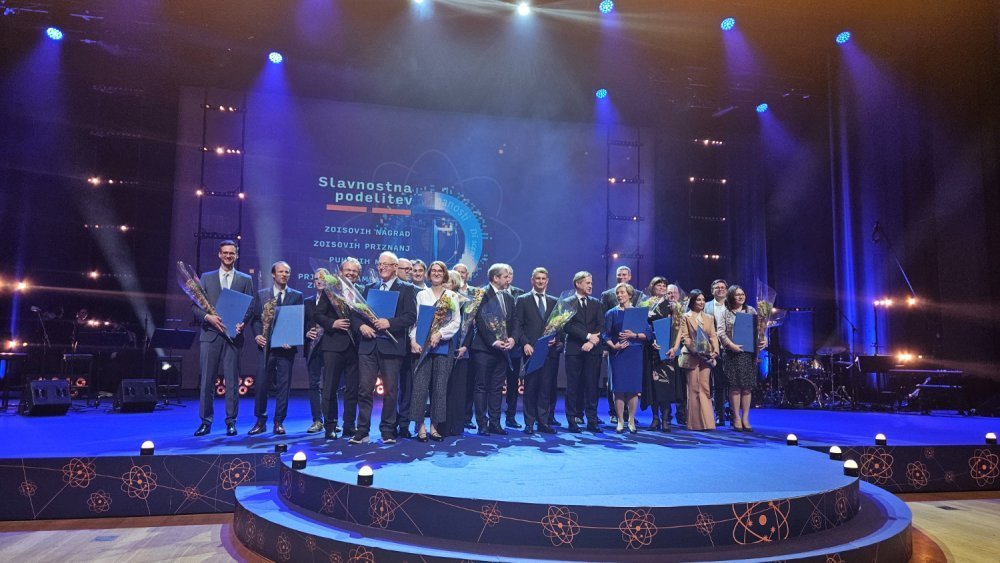
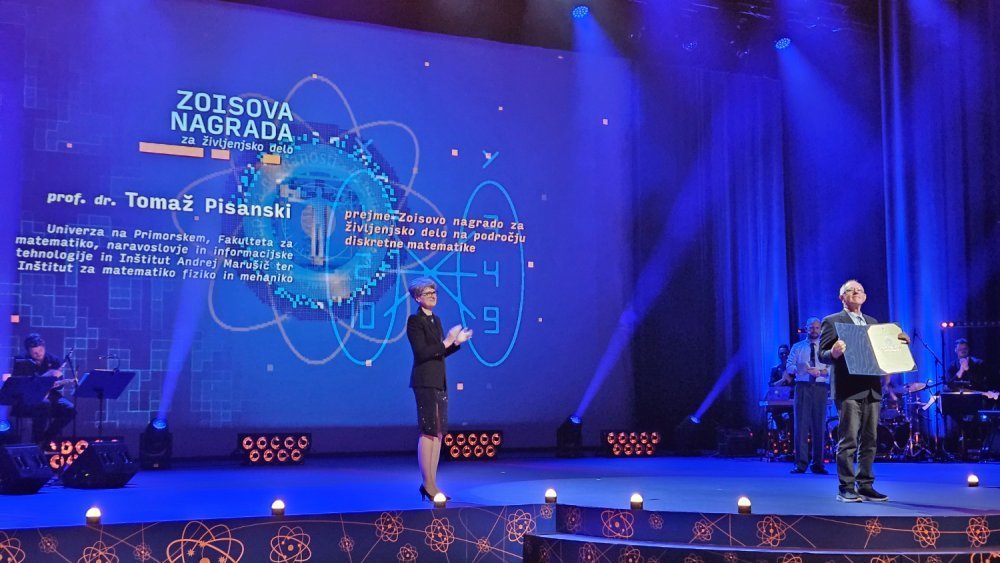
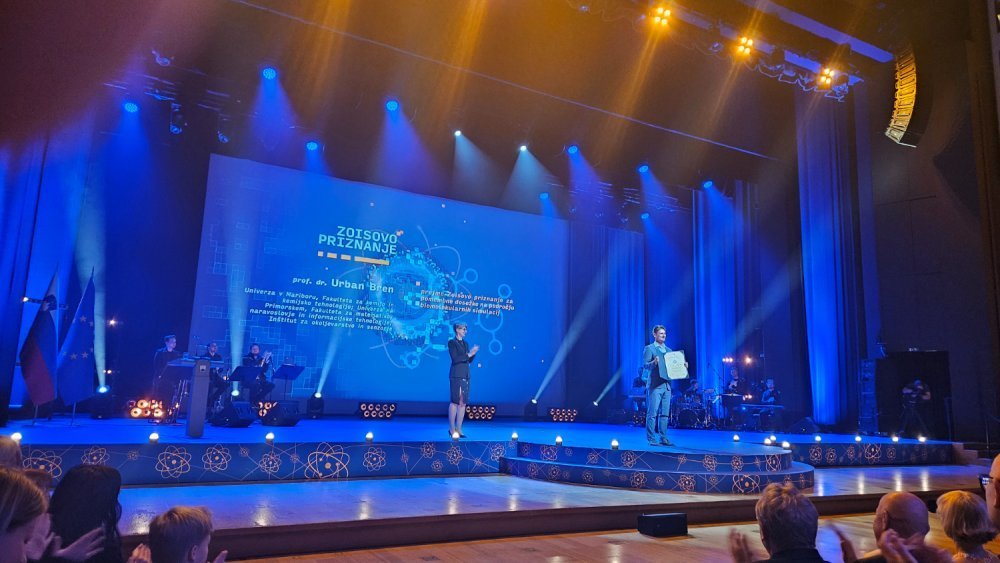
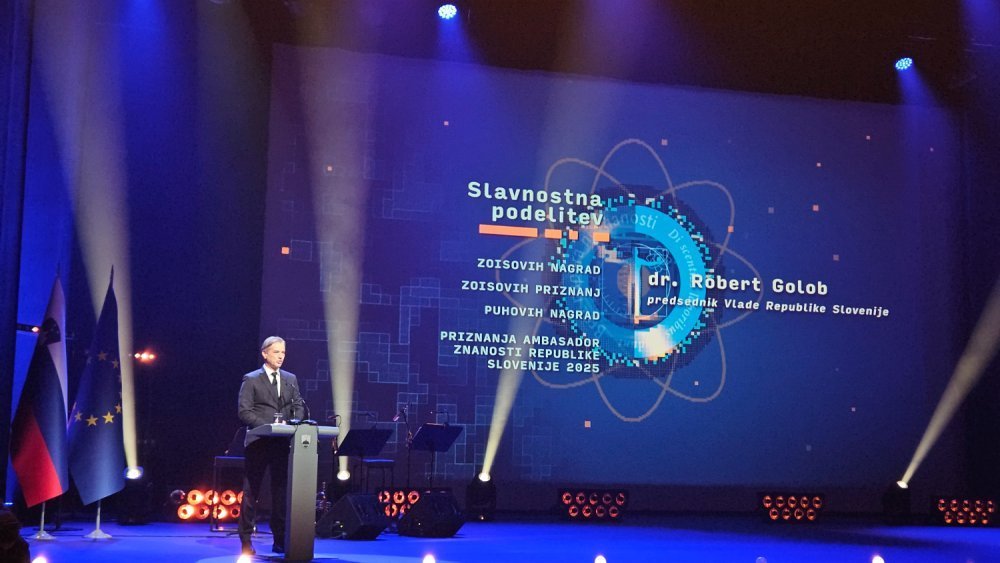
On Sunday, November 9, 2025, on the eve of the first celebration of the new Slovenian holiday, Science Day, this year's Zois Awards and Recognitions, the highest national awards for achievements in the field of scientific research and development in the Republic of Slovenia, and the Puh Awards and Recognitions, the highest national awards for inventions, technological and non-technological developments and the application of scientific findings in all fields of science in the introduction of innovations into economic and social practice, were awarded at a gala event in the Gallus Hall of the Cankarjev dom. They are awarded to researchers and innovators whose achievements have made a lasting contribution to the development of scientific research, development and innovation in the Republic of Slovenia.
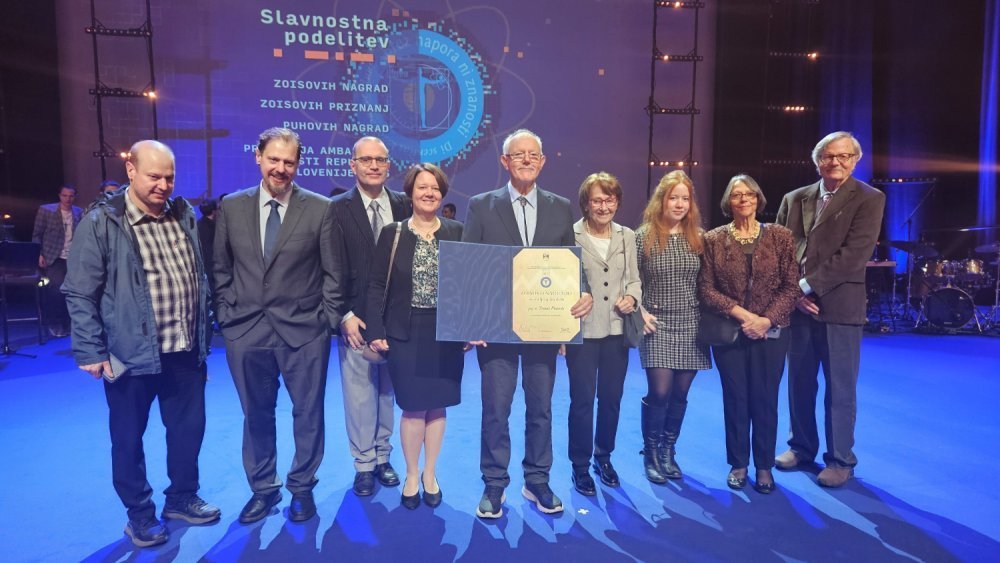
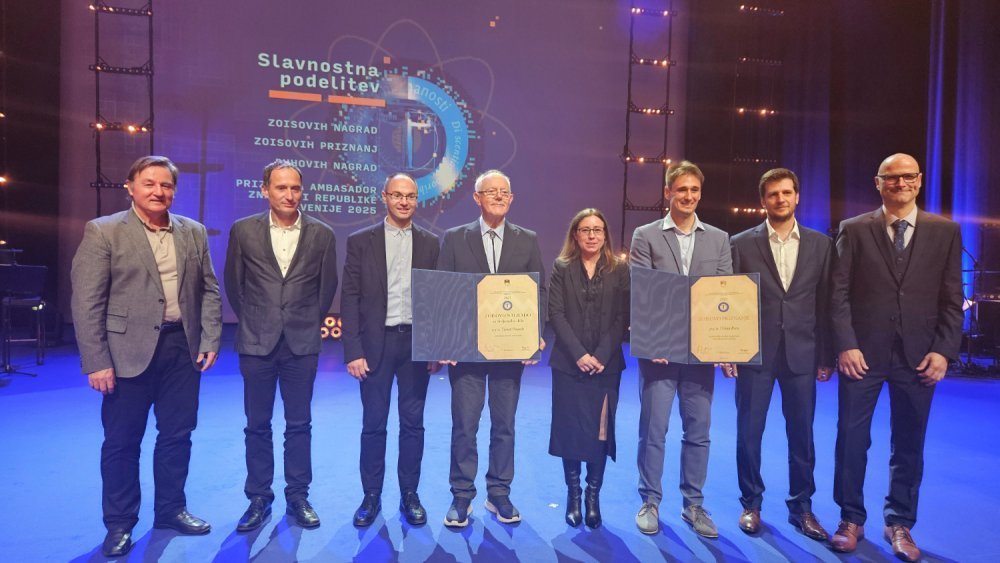
Among this year's recipients of the Zois Award are two award winners employed at the University of Primorska. The announcement took place in October at an event organized by the Ministry of Higher Education, Science, and Innovation, which also presents the awards. Dr. Tomaž Pisanski received the Zois Prize for lifetime achievement, while Dr. Urban Bren received the Zois Award for special achievements. We sincerely congratulate both of them on their awards.
The award, named after the Slovenian researcher Žiga Zois, has been awarded in Slovenia since 1998 to all outstanding researchers whose work has made a lasting mark on scientific research and development in the Republic of Slovenia and has made a significant contribution to its development.
The the Zois Prize for lifetime achievement in the field of discrete mathematics goes to Prof. Dr. Tomaž Pisanski (UP FAMNIT, UP IAM, IMFM)
 Prof. Dr Tomaž Pisanski is a renowned researcher in discrete mathematics, a field that studies discrete structures such as integers, graphs and statements in logic that do not vary continuously, but have distinct, separated values. By establishing and developing the world-famous Slovenian school of discrete mathematics, he has significantly influenced the development of this field. He founded and led the Department of Theoretical Computer Science at the Institute of Mathematics, Physics and Mechanics, contributed to the founding of the University of Primorska, established and co-edited three scientific journals, including the Slovenian leading scientific journal Ars Mathematica Contemporanea, and founded the Slovenian Discrete and Applied Mathematics Society. He organised several international scientific meetings and also chaired the Organising Committee of the 8th European Congress of Mathematics in Portorož. In the history of mathematics, he researched Jurij Vega and Ivo Lah.
The Zois Award for significant achievements in the field of biomolecular simulations goes to Prof. Dr. Urban Bren (UM FKKT, UP FAMNIT, IOS)
 Prof. Dr Urban Bren uses computer simulations to study how various chemicals affect human health and develops new, more selective diagnostic methods. He was the first to demonstrate that the chemical reactivity of substances is a good predictor of their potential carcinogenicity. He is also involved in the search for natural compounds that could inhibit cancer development – with the long-term goal of creating dietary supplements that would help prevent the disease. Additionally, he studies the impact of microwave radiation on the risk of developing cancer or neurological diseases. Using advanced computational tools, he designs new therapeutic agents, such as more effective antiviral drugs and safer painkillers.
Foto: Matjaž Tavčar for MVZI
Thursday, 6 November 2025 European Innovation Council (EIC) highlights the achievements of Dr. Anna Sandak in the Women Leadership Programme (EIC Women Leadership)
Recipient of an EIC Pathfinder project, researcher and head of the materials research group at InnoRenew CoE and UP IAM, participant of the seventh cohort of the EIC Women Leadership Programme, and much more. In a detailed interview, the European Innovation Council (EIC) highlights the achievements of Dr. Anna Sandak, with particular emphasis on the ARCHI-SKIN and REMEDY projects.
The EIC describes Dr. Sandak’s journey in the seventh cohort of the EIC Women Leadership Programme as an example of how confidence and well-developed communication skills can enhance scientific impact and help research move out of the laboratory and into real-world application.
The programme, launched as a pilot in 2021, has so far trained more than 300 researchers and entrepreneurs. The seventh cohort, which included Dr. Sandak, spent three months focusing on developing entrepreneurial skills aimed at founding and growing companies. The effects were immediate: shortly after the programme concluded, the ARCHI-SKIN project received funding from the European Research Council (ERC) and was selected for the Science4EU campaign, gaining the opportunity to be presented to the broader public. In the interview, Dr. Sandak emphasized: »The opportunity to work with experienced mentors, inspiring role models, and fellow participants gave me practical leadership tools, greater confidence, and a better understanding of how to navigate the complexities of innovation, technology transfer, and business strategies. I now feel better prepared to effectively lead my team and guide our project toward long-term goals.«
Even before entering the programme, Dr. Sandak’s team had secured EIC Pathfinder funding for the REMEDY project. As the first Pathfinder project in Slovenia led by a woman coordinator, it marked Dr. Sandak as the first researcher in Slovenia to receive both ERC and EIC funding for her projects. She adds that the EIC Women Leadership Programme changed her perspective on innovation and entrepreneurship. She continues: »I am already passing the tools and knowledge I gained on to my team. Together, we are now more aware of our shared abilities, strengths, and our potential to bring our research into the real world. The programme helped me better understand the entrepreneurial mindset and the strategic steps needed to move from scientific discovery to market application.«
Deeply embedded in the academic environment and oriented toward the future, Dr. Sandak continues to successfully lead her team toward new goals. Along this journey, science is accompanied by vision, leadership, and the courage to innovate.
We invite you to read the full interview.

