



Wednesday, 27 May 2026 An Important Contribution to Understanding Plant Diversity in the Mediterranean
A study co-authored by Assist. Prof. Peter Glasnović, PhD, from the Department of Biodiversity, as the lead author, makes an important contribution to understanding patterns of plant diversity in the Mediterranean.
About the study:
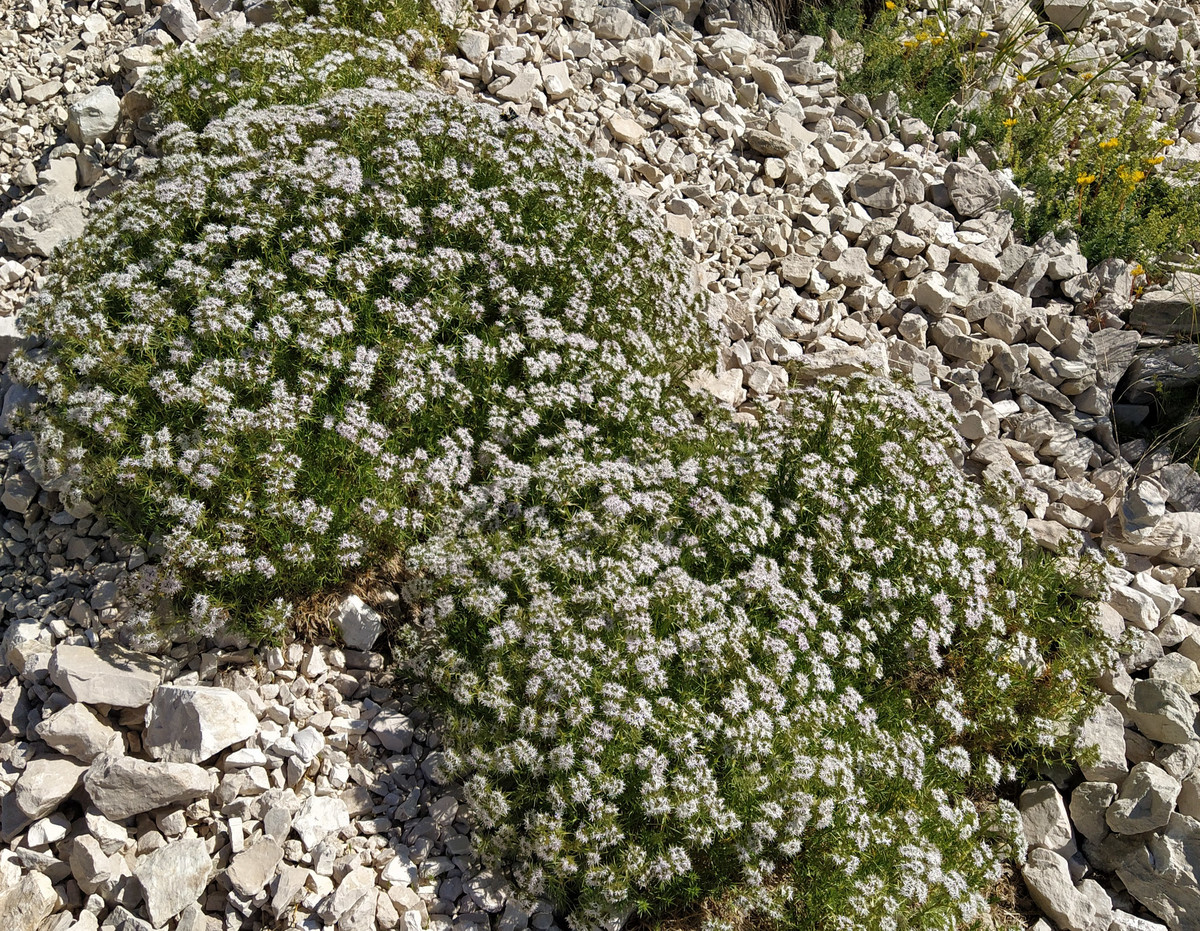
The research sheds light on the evolutionary history of Drypis spinosa, a plant species of the amphiadriatic-ionian region that inhabits scree slopes across the Balkan and Apennine Peninsulas, with disjunct populations in the Kamnik–Savinja Alps. Using modern molecular, morphometric, and spatial approaches, the researchers investigated the species’ genetic diversity and its distribution both today and during the Last Glacial Maximum.
The results show that the mountainous regions of the western Balkans play a key role in preserving genetic diversity, while also revealing previously unrecognized historical connections between populations on the Balkan and Apennine Peninsulas. The findings contribute to a better understanding of biogeographical processes in the Mediterranean, one of the world’s biodiversity hotspots, and offer new insights into the evolution of plant species in this region.
The study was published in the Journal of Biogeography and is freely accessible at the following link.
