University of Primorska
Faculty of Mathematics, Natural Sciences and Information Technologies
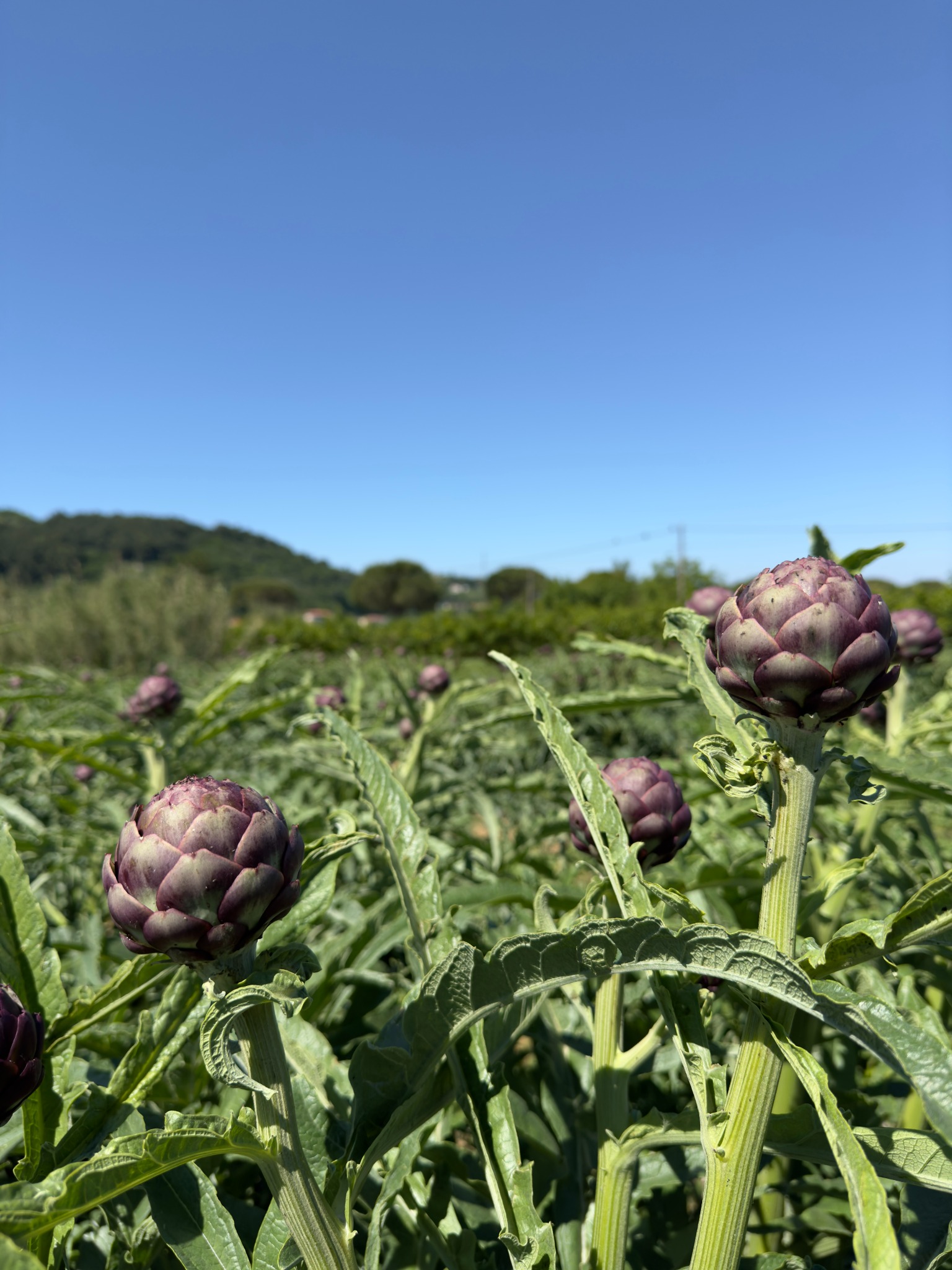
The small purple artichoke from Strunjan is part of the landscape and heritage of Slovenian Istria. To preserve it and restore its place in local fields, six partners have joined forces in the “Strunjan Artichoke” project. Each partner contributes its expertise, and together they are working to ensure that this traditional variety does not fade into oblivion.
University of Primorska
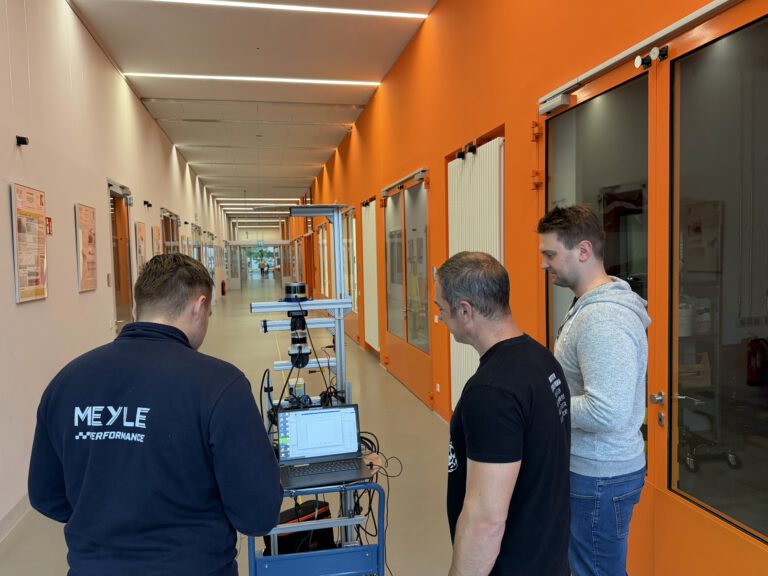
Researchers from UP FAMNIT have experience in studying the genetic resources of Mediterranean fruit species, as well as medicinal and aromatic plants. In this project, however, they are focusing on the “Strunjan Artichoke” and providing the scientific expertise needed for its preservation.
In cooperation with the Strunjan Landscape Park Public Institute, they have already conducted a field survey of artichoke plantations in Strunjan. Together with the project partners, they have also collected plant material from local growers for the establishment of a mother plantation and a promotional plantation.
Through genetic and morphological assessments, they are now determining the characteristics that distinguish the “Strunjan Artichoke” from commercial varieties. Their findings to date have also contributed to the production of a video about the “Strunjan Artichoke”. The collected data will provide a scientific basis for the further procedure of registering the variety in the official Variety List. Based on the analyses, the researchers will also advise the partners on selecting mother plants for further propagation.
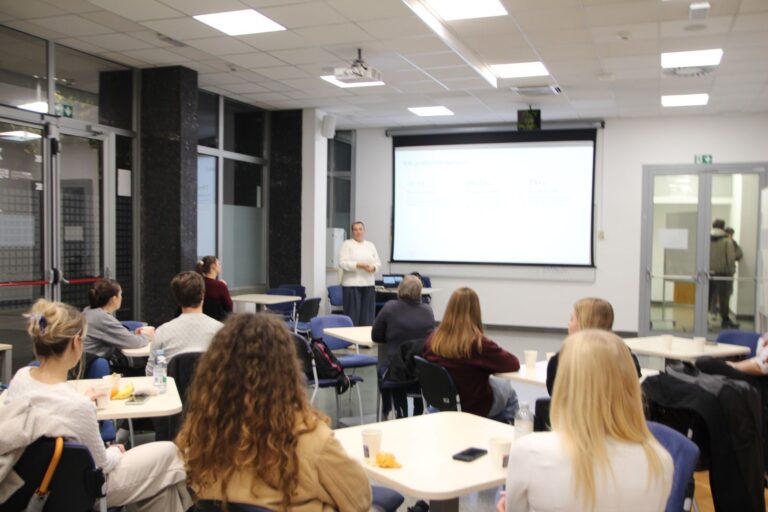
By the end of the year, the researchers will present the findings of the genetic analysis to the project partners and participate in a joint visit to the mother plantation and the information point.
UP FAMNIT is preparing an informative publication that will bring together existing knowledge about the artichoke and present the findings of the project research. The publication will be available at the information point and will also be distributed by the partners at events and workshops.
Strunjan Landscape Park Public Institute
The Public Institute manages Strunjan Landscape Park and is responsible for preserving its natural and cultural heritage, of which the artichoke is also an important part. As the lead project partner, it coordinates the work of all participants and maintains regular contact with them. It also connects researchers with artichoke plantation owners and regularly informs the public about project activities through social media.
This year, it collaborated with the Solinar Strunjan Tourist Association on the Artichoke Days event. It helped organise the event and coordinate the venue, contributed to the preparation of a radio advertisement, and assisted with the stands and distribution of seedlings during the event.
The Institute also worked with researchers from the University of Primorska to survey artichoke plantations in Strunjan. Later, together with the researchers, it collected plant material from local growers for the mother and promotional plantations.
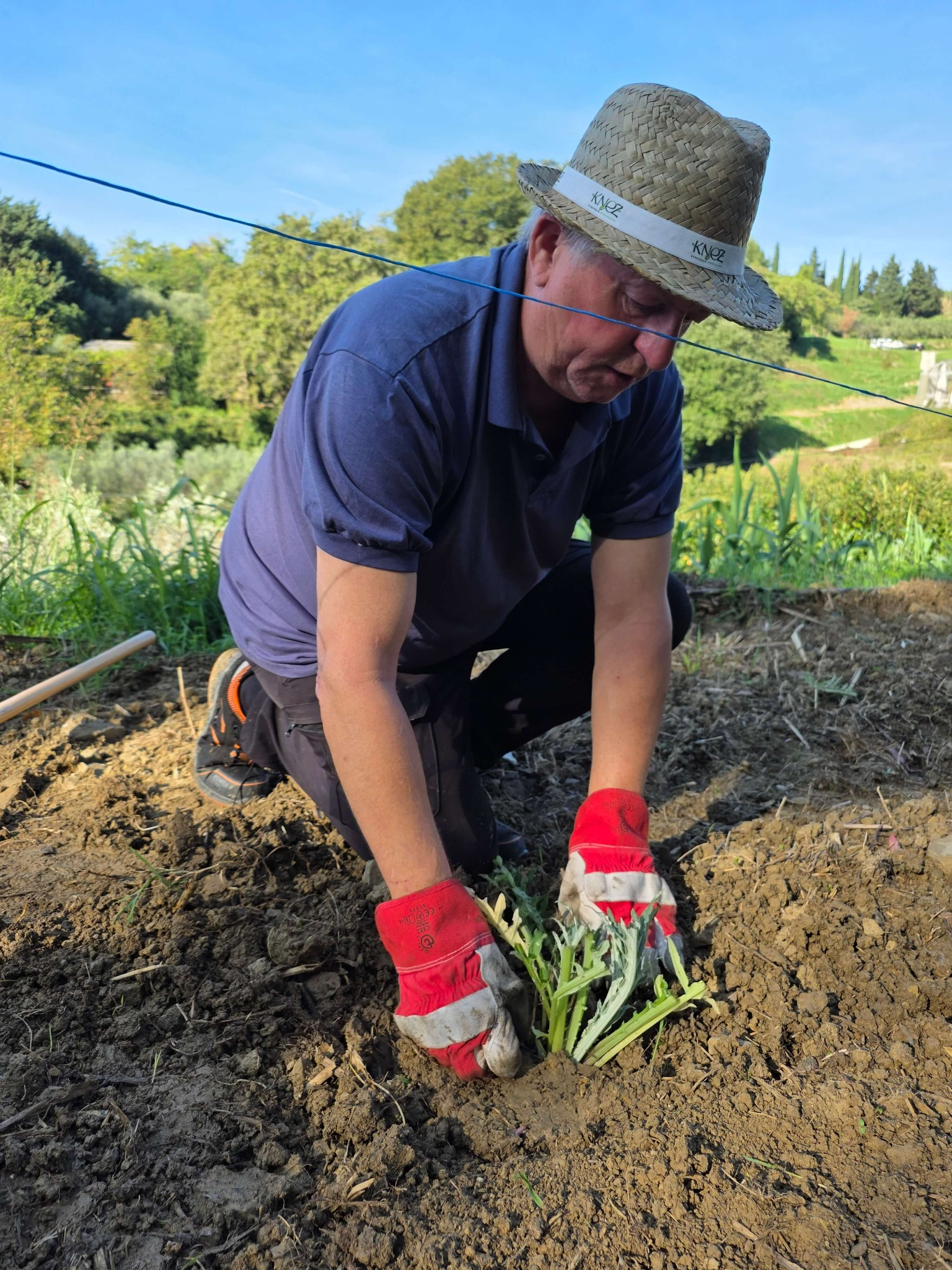
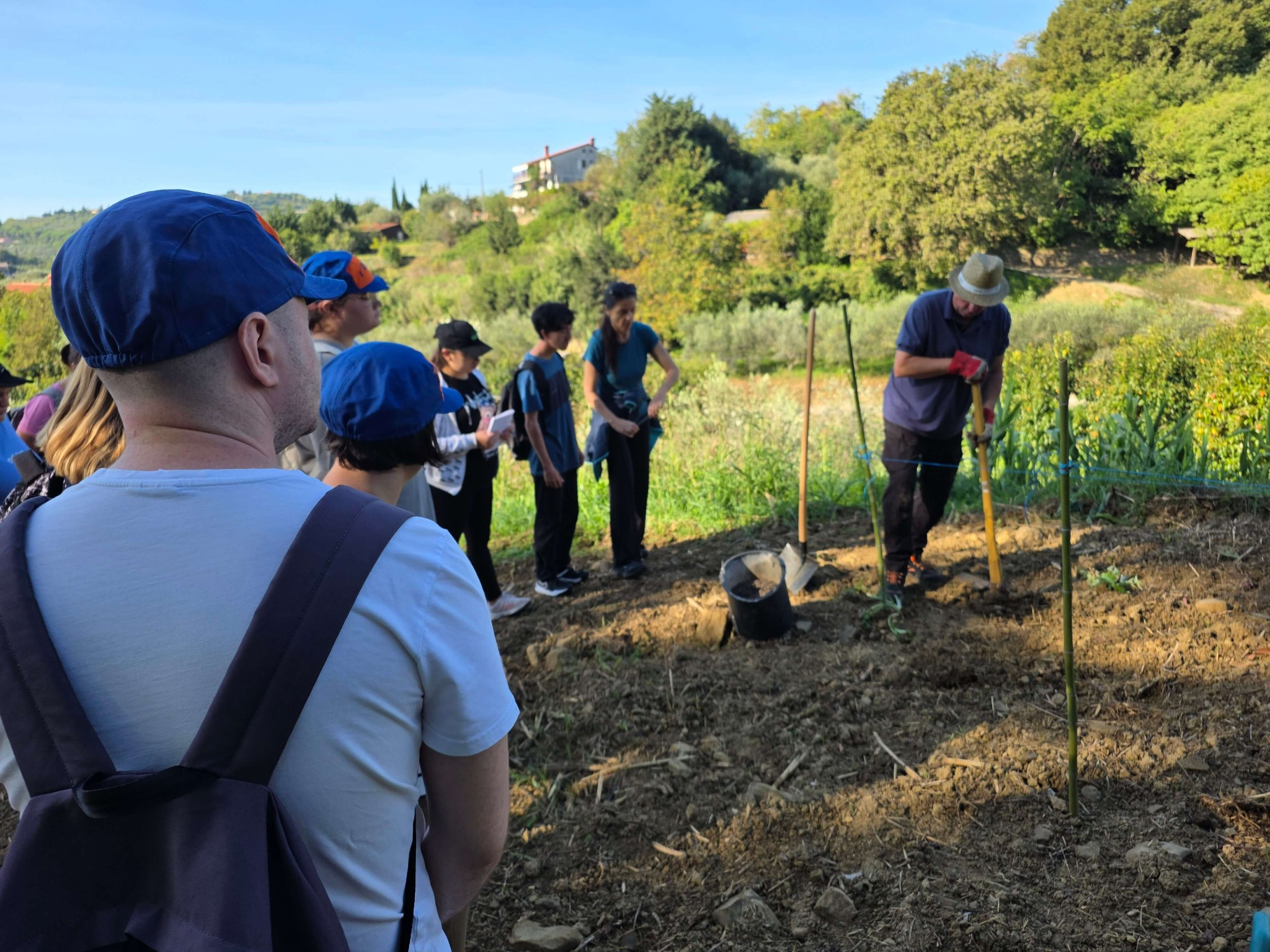
In cooperation with the Elvira Vatovec Strunjan Special Education Centre, it organised a workshop for young people with special educational needs. The first part took place at the Knez Homestead, where participants learned how to prepare a field and plant artichokes. Each participant also planted their own seedling. During the second part, they visited the Giassi Farm, where they explored the farm and its plantation and learned how artichokes grow and reproduce.
A brochure on the uses of the “Strunjan Artichoke”, featuring recipes and preparation methods contributed by the Giassi Farm and the Knez Homestead, is currently being prepared. The brochure will be available at events and through the project partners. A video is also being produced in cooperation with the partners. It will introduce the variety, its tradition in Strunjan Landscape Park and its importance for sustainable agriculture, while also demonstrating how it is cultivated, maintained and propagated.
By the end of the year, the Institute will organise a visit to the mother plantation and information point for all project partners, as well as a meeting at which researchers from the University of Primorska will present the findings of the genetic analysis.
Moretini Nursery
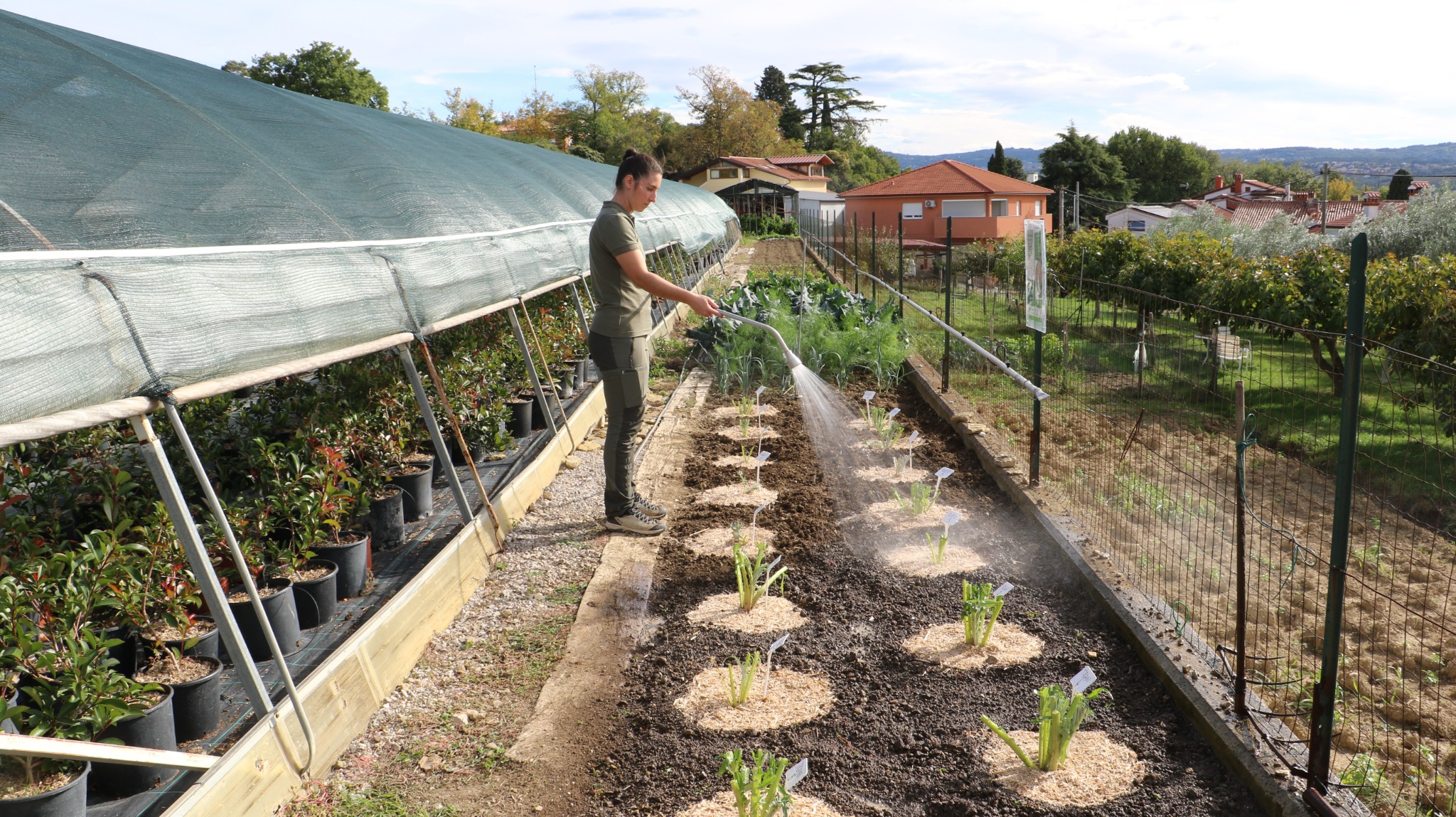
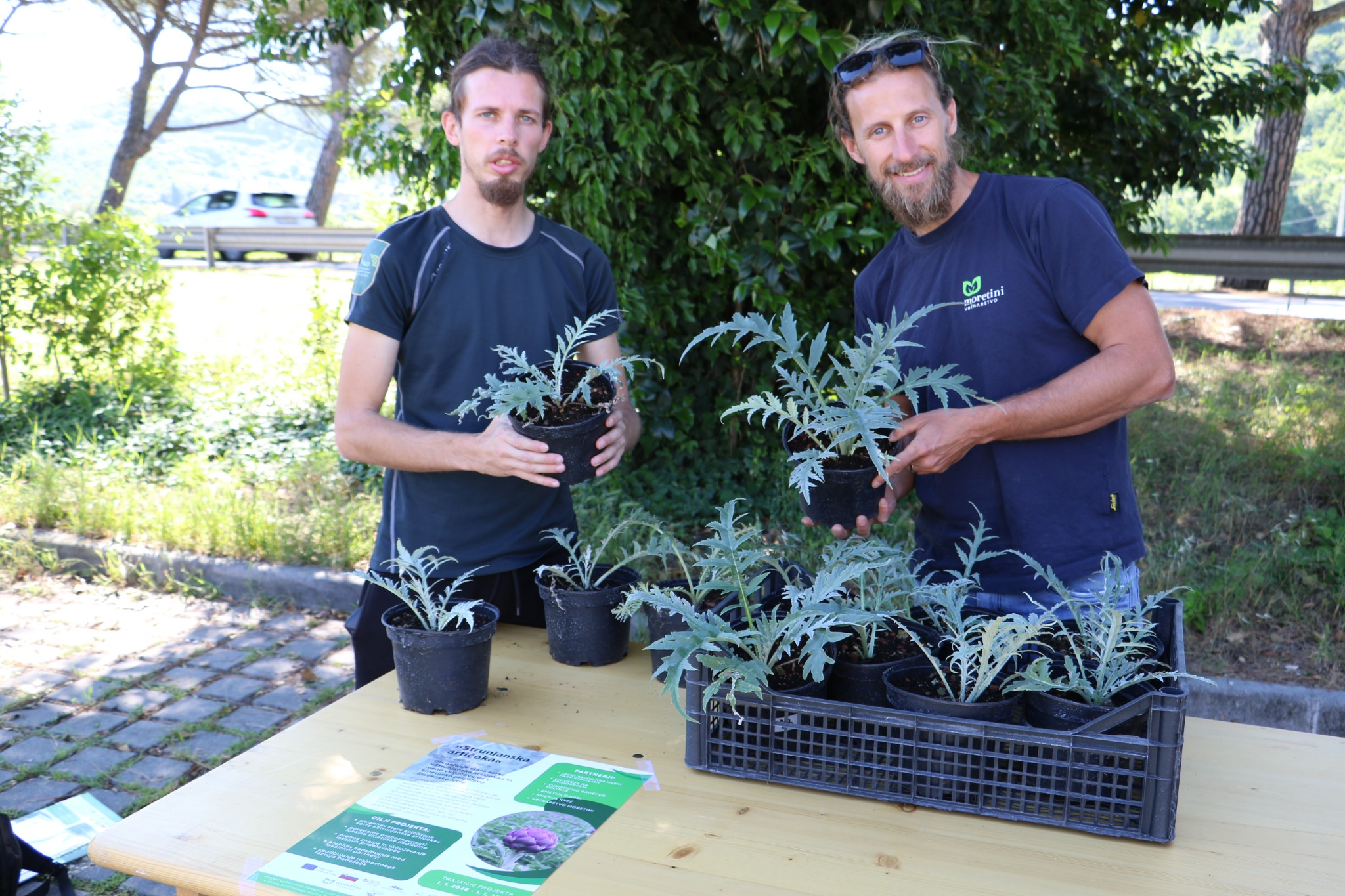
This family-run nursery, with more than 30 years of tradition, specialises in seedling production. As part of the project, it is growing “Strunjan Artichoke” seedlings at its premises, maintaining the mother plantation and preparing the information point. It also regularly shares updates about its project activities on social media.
A promotional plantation has already been established on the nursery’s premises, and visitors to this year’s Artichoke Days received seedlings from it. At least 300 seedlings will be grown there for next year’s Artichoke Days.
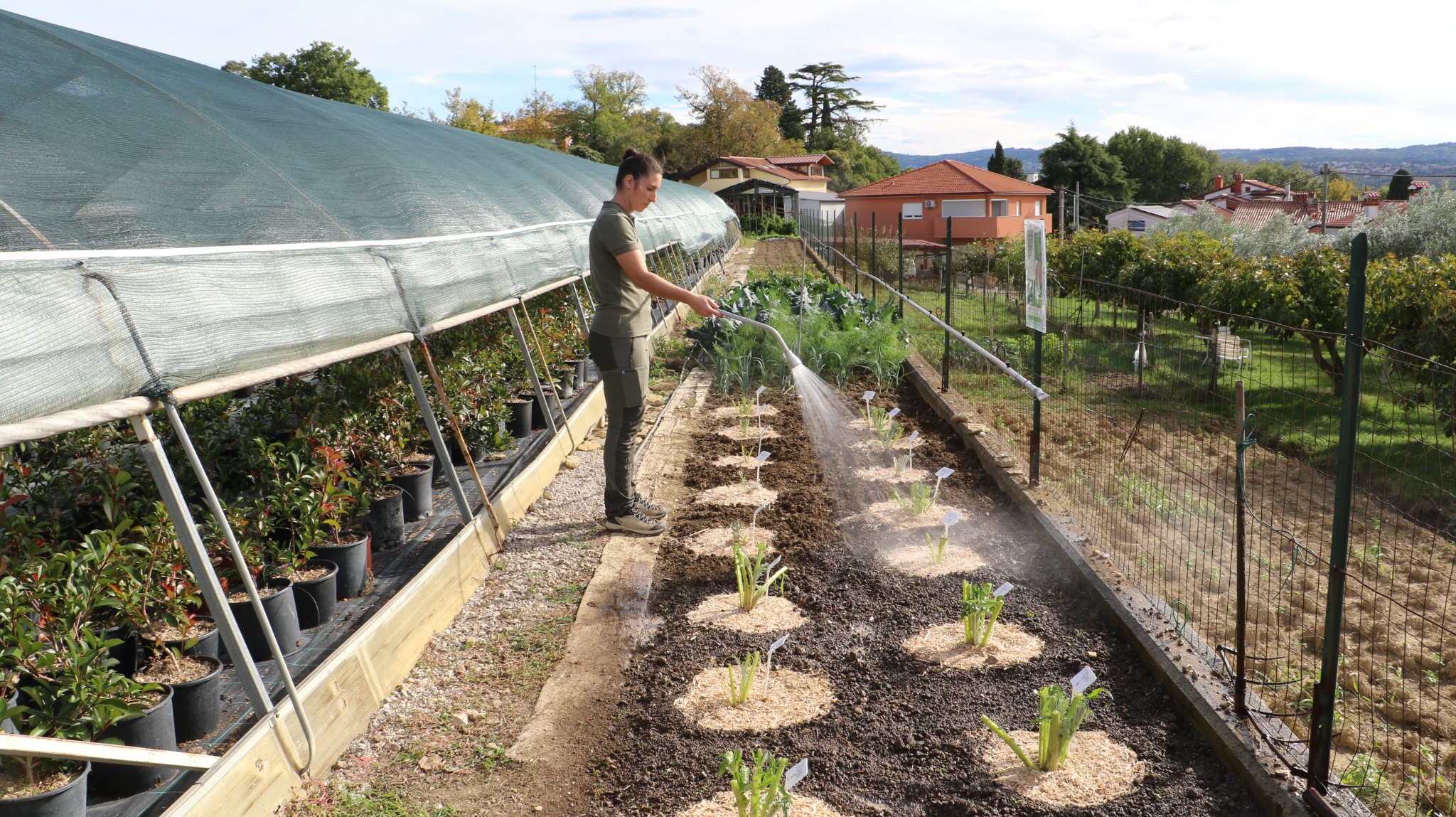
In autumn, the nursery prepared an area and planted the mother plantation, which will serve as a basis for studying and propagating the variety. The project partners collected the plant material for the plantation from local growers.
An information point is being set up next to the mother plantation, and the necessary equipment is being prepared. The nursery has also tested a programme of workshops for children, which will take place at the information point.
By the end of the year, the nursery will host the project partners for a joint visit to the mother plantation and information point.
Giassi Farm
Artichokes take centre stage at the Giassi family farm in spring. For many years, the family has been working towards having the “Strunjan Artichoke” recognised as an old local variety. As part of the project, they have restored two plantations. They also share updates about the project on their social media channels.
Every year, during Artichoke Days, they take visitors to their plantations, introduce them to the plant and offer tastings of various artichoke dishes.
They participated in the survey of artichoke plantations in Strunjan and will also contribute their experience and knowledge to the maintenance of the mother plantation.
They hosted a workshop at their farm for young people from the Elvira Vatovec Strunjan Special Education Centre. The participants explored the farm and the plantation and learned how artichokes grow and reproduce.
They also contributed their recipes to the brochure on the uses of the “Strunjan Artichoke” and are participating in the production of the video about the variety.
Knez Homestead
Artichokes have always been part of life at the Knez Homestead. The family had been growing them for generations, long before they became a local speciality. They use the leaves to prepare artichoke tea and incorporate them into natural cosmetics. As part of the project, they have restored one plantation and established a new one. They also share updates about the project on their social media channels.
During Artichoke Days, they introduce visitors to the farm and their artichoke-based products.
They participated in the survey of artichoke plantations in Strunjan and will also contribute their experience and knowledge to the maintenance of the mother plantation.
They hosted a workshop at their plantations for young people from the Elvira Vatovec Strunjan Special Education Centre. The participants learned how to prepare a field and plant artichokes, and each planted their own seedling.
They also contributed their recipes to the brochure on the uses of the “Strunjan Artichoke” and are participating in the production of the video about the variety.
Solinar Strunjan Tourist Association
For many years, the Solinar Strunjan Tourist Association has organised a traditional event dedicated to the artichoke, one of the largest events of its kind in Strunjan. Its members devote a great deal of voluntary work to making the event possible. The association has also created a dedicated project page on its website and regularly shares updates through social media.
As part of the project, the event was given a new name, Artichoke Days, and a refreshed programme. This year, the association led its organisation and was responsible for its promotion, including the preparation of a radio advertisement. It worked in cooperation with the Strunjan Landscape Park Public Institute.
The project is being implemented within the framework of the Green Istria Local Action Group (LAG) and co-financed by the European Union through the European Agricultural Fund for Rural Development (EAFRD), under the 2023–2027 Common Agricultural Policy Strategic Plan (LEADER/CLLD).