University of Primorska
Faculty of Mathematics, Natural Sciences and Information Technologies
Why Do We Preserve Traditional Varieties?
Local varieties have adapted over centuries of cultivation to the soil and climate conditions of the areas where they originated.
When they are replaced by newer commercial varieties, part of their genetic diversity may also be lost. Traditional varieties may hold unique characteristics and adaptations that will be essential for sustainable food production in the face of climate change. This is why preserving them for future generations is so important.
Traditional varieties are also part of our cultural heritage. They are associated with knowledge, customs and dishes that have been passed down from generation to generation.
The same is true of the Strunjan Artichoke. Local growers cultivated it in their fields long before it became known as a local speciality. Through this project, we aim to preserve it and restore its place in agricultural production in Slovenian Istria.
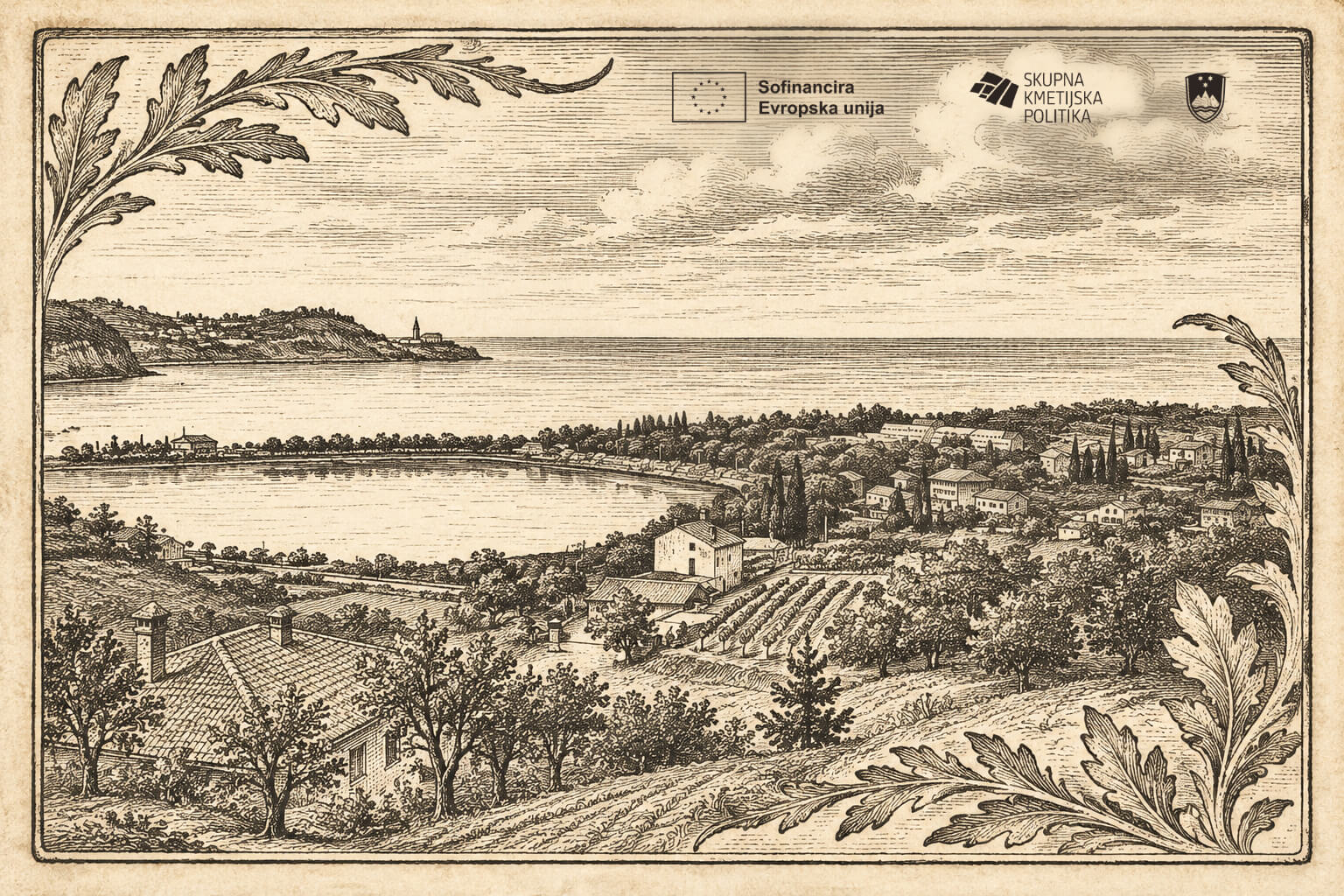
Illustration created using artificial intelligence.
The project is implemented within the framework of the Green Istria Local Action Group (LAG) and co-financed by the European Union through the European Agricultural Fund for Rural Development (EAFRD), under the 2023–2027 CAP Strategic Plan (LEADER/CLLD).