University of Primorska
Faculty of Mathematics, Natural Sciences and Information Technologies
- Študij
- Mednarodno sodelovanje
- Raziskovanje
- O fakulteti
Quick Facts about FAMNIT 2025/2026
Students 2025/26
Enrollment
Undergraduate
799
Master
263
Doctoral
57
Altogether
1092
Freshmen
Undergraduate
289
Master
99
Doctoral
17
Altogether
361
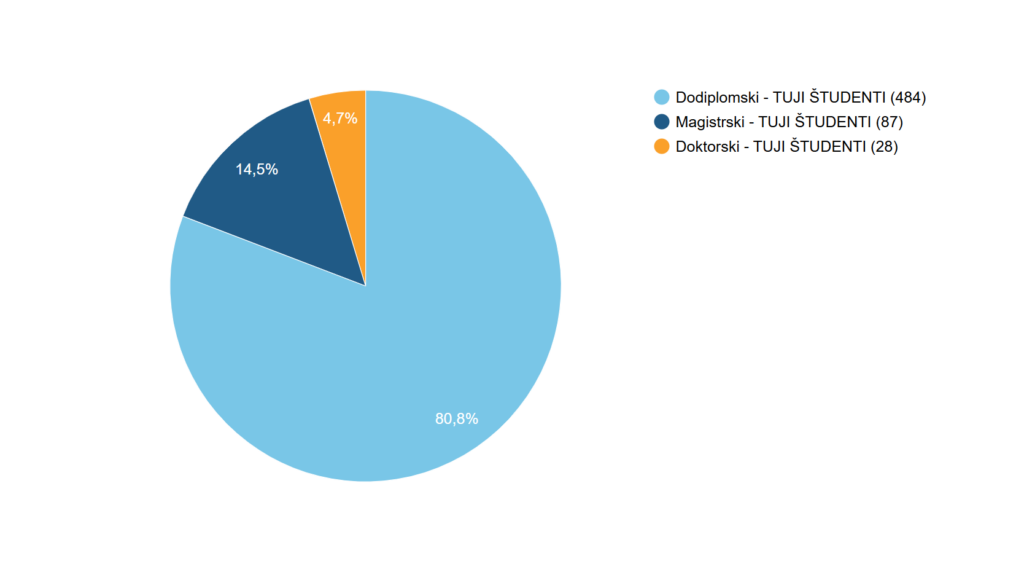
International students
Undergraduate*
484
Master**
87
Doctoral***
28
Altogether****
599
* From: Algeria, Azerbaijan, Bangladesh, Belarus, Belgium, Bosnia and Herzegovina, Bulgaria, Croatia, Finland, Hungary, Ireland, Israel, Italy, Kosovo, Latvia, Montenegro, North Macedonia, Pakistan, Poland, Russia, Serbia, Spain, Ukraine and USA.
** From: Bangladesh, Bosnia and Herzegovina, Bulgaria, Croatia, Egypt, India, Kosovo, Montenegro, Nigeria, North Macedonia, Serbia and Ukraine.
*** From: Australia, Belarus, Bosnia and Herzegovina, Croatia, Hungary, Iran, Italy, North Macedonia, Pakistan, Serbia, Sri Lanka and Ukraine.
**** Foreign students by citizenship.
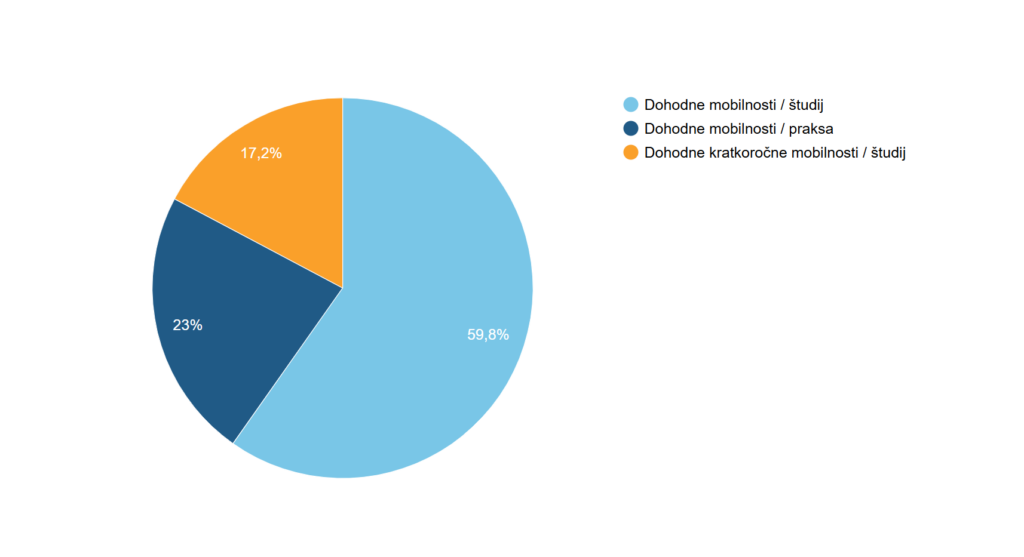
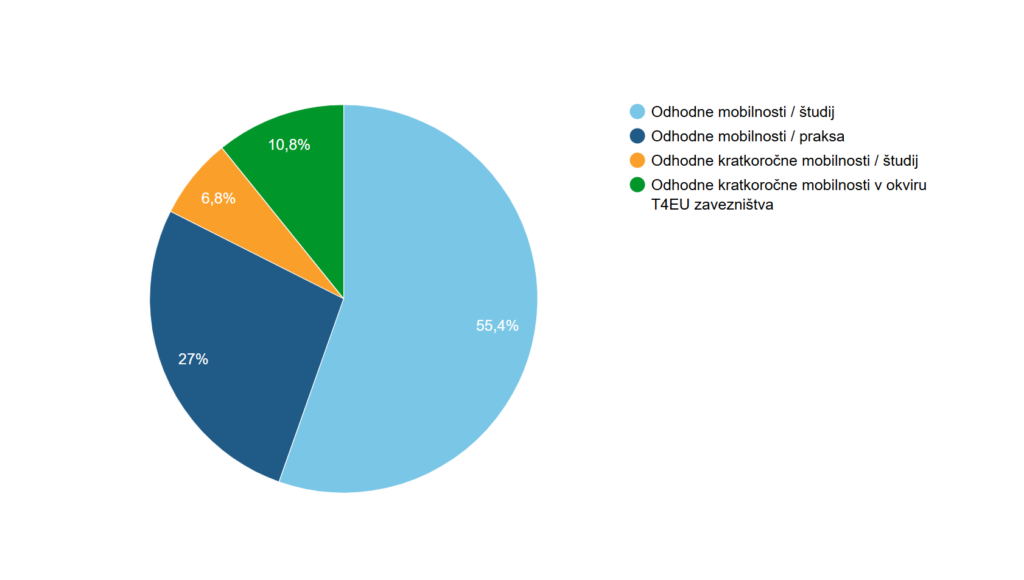
Erasmus and other exchanges
| Type of Mobility | Study | Traineeship | Short-term mobilities - Study | Short-term mobilities within the T4EU alliance | Total |
|---|---|---|---|---|---|
|
Incoming mobilities |
52 |
20 |
15 |
– |
87 |
|
Outgoing mobilities |
41 |
20 |
5 |
8 |
74 |
Statistics are dated on 13 November 2023, obtained on the basis of already present students, nominations, and applications.
Incoming mobilities from: Austria, Brazil, Cyprus, Finland, France, Germany, Greece, Italy, Latvia, Lithuania, Serbia, Spain and Turkey.
Outgoing mobilities to: Austria, Cyprus, Czech Republic, Italy, Portugal, Spain and Turkey.
Gender Statistics
Female
639 (58.52%)
Male
453 (41.50%)
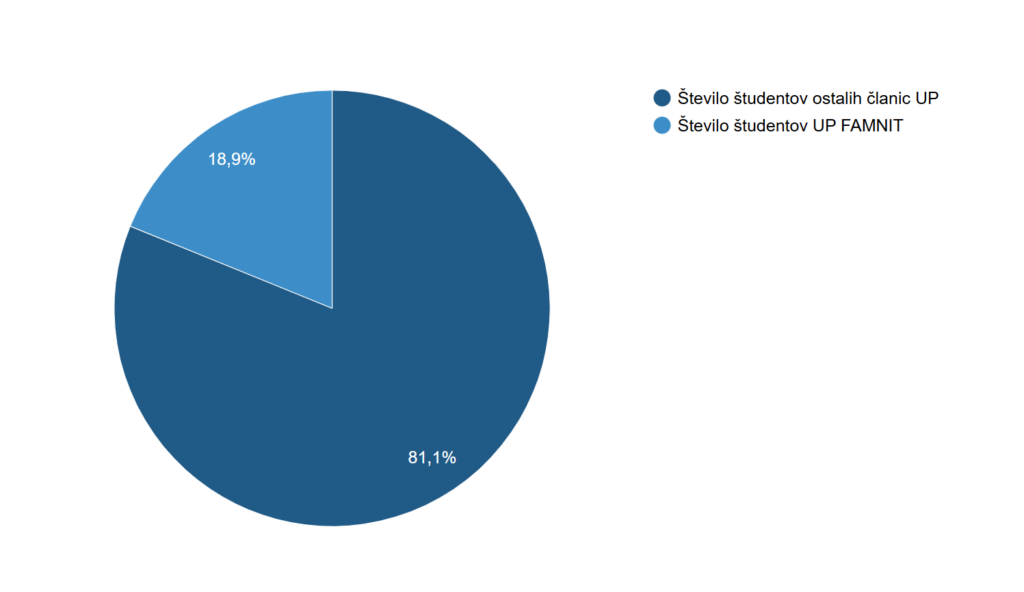
Famnit Students Share in the Structure of UP Students
The number of UP students
5789
The number of FAMNIT students
1092 (18.87%)
Enrollment by Study Programmes
Undergraduate Programmes (full-time)
- Mathematics (Slovene): 31 (1st year: 18 / 2nd year: 9 / 3rd year: 4 / pre-graduation year: 0)
- Mathematics (English): 53 (30/13/9/1)
- Mathematics in Economics and Finance: 37 (26/8/3/0)
- Computer Science (Slovene): 118 (46/37/25/10)
- Computer Science (English): 170 (49/61/41/19)
- Bioinformatics (Slovene): 47 (27/10/3/7)
- Bioinformatics (English): 66 (27/21/14/4)
- Conservation Biology / Biodiversity: 82 (33/21/13/15)
- Agronomy (VS) / Mediterranean Agriculture (VS): 42 (26/7/4/5)
- Biopsychology: 153 (64/43/38/8)
Master Programmes (full-time)
- Mathematical Sciences (Slovenian): 2 (1st year: 0 / 2nd year: 1 / pre-graduation year: 1)
- Mathematical Sciences (English): 10 (8/1/1)
- Computer Science: 26 (18/5/3)
- Nature Conservation: 36 (16/14/6)
- Biopsychology: 17 (7/3/7)
- Psychology: 90 (28/30/32)
- Sustainable Built Environments (Slovenian): 3 (2/1/0)
- Sustainable Built Environments (English): 5 (1/2/2)
- Data Science (Slovenian): 3 (2/1/0)
- Data Science (English): 29 (13/10/6)
Doctoral Programmes (full-time)
- Mathematical Sciences (Slovenian): 2 (1st year: 0 / 2nd year: 0 / 3rd year: 2 / pre-graduation year: 0)
- Mathematical Sciences (English): 8 (3/3/1/1)
- Computer Science (Slovenian): 6 (2/0/1/1/2)
- Computer Science (English): 14 (4/7/0/3/0)
- Renewable Materials for Healthy Built Environments (Slovenian): 3 (1/0/0/2)
- Renewable Materials for Healthy Built Environments (English): 11 (4/2/2/3)
- Suicidology and Mental Health (Slovene): 6 (1/1/2/2)
- Suicidology and Mental Health (English): 0 (0/0/0/0)
- Conservation Biology (Slovene): 6 (2/1/2/1)
- Conservation Biology (English): 1 (0/0/1/0)
Regional Breakdown
Slovenian citizens
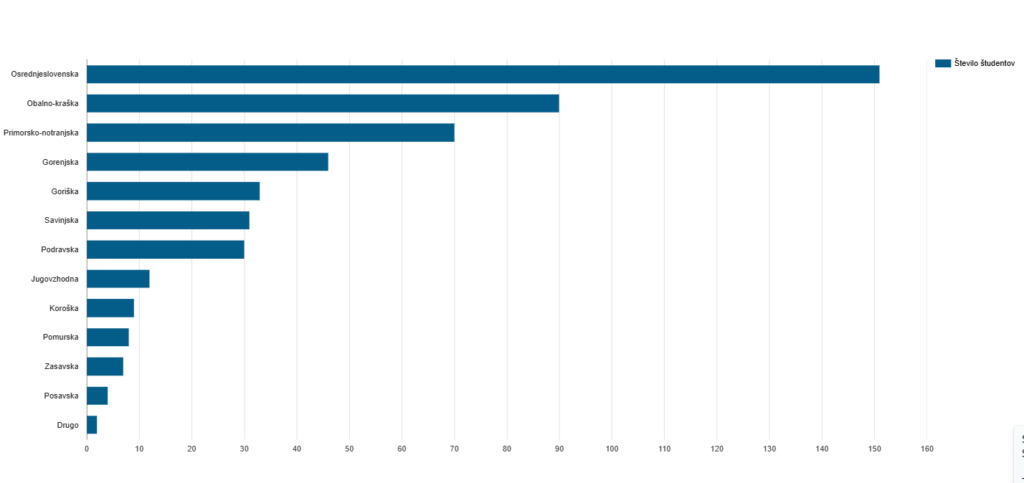
The following shows data for 493 students who are citizens of the Republic of Slovenia (45,1 % of all enrolled students in the academic year 2025/26). The other 54,9 % of all enrolled students (defined above as international students) are not included in the analysis of students by regional affiliation.
- Gorenjska – 46 (9,33 %)
- Goriška – 33 (6,69 %)
- Jugovzhodna – 12 (2,43 %)
- Koroška – 9 (1,83 %)
- Obalno-kraška – 90 (18,26 %)
- Osrednjeslovenska – 151 (30,63 %)
- Podravska – 30 (6,09 %)
- Pomurska – 8 (1,62 %)
- Posavska – 4 (0,81 %)
- Primorsko-notranjska – 70 (14,20 %)
- Savinjska – 31 (6,29 %)
- Zasavska – 7 (1,42 %)
- Foreign – 2 (0,41 %)
*Students with Slovenian citizenship who do not have permanent residence in Slovenia.
Foreign citizens
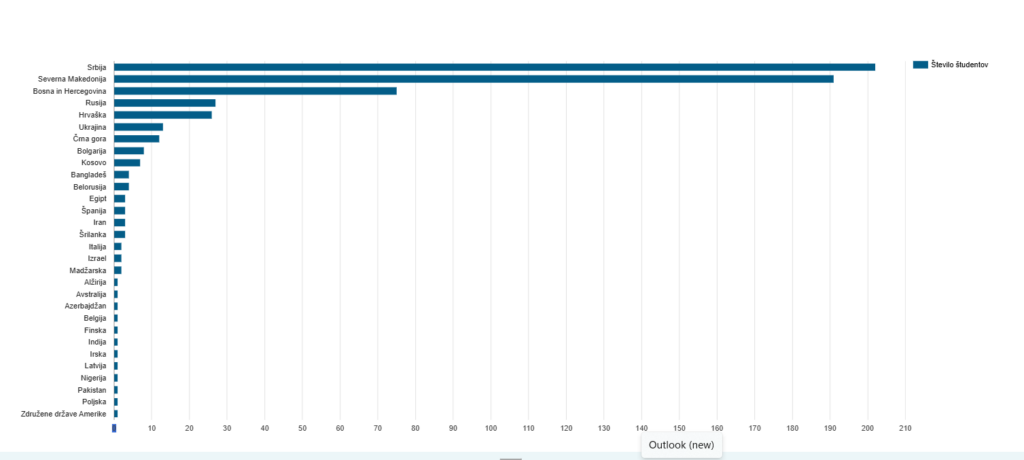
The following section presents data for 599 students who are not citizens of the Republic of Slovenia (defined above as international students), representing 54.9% of all students enrolled in the 2025/26 academic year.
- Serbia – 202 (33,72 %)
- North Macedonia – 191 (31,89 %)
- Bosnia and Herzegovina – 75 (12,52 %)
- Russia – 27 (4,51 %)
- Croatia – 26 (4,34 %)
- Ukraine – 13 (2,17 %)
- Montenegro – 12 (2,00 %)
- Bulgaria – 8 (1,34 %)
- Kosovo – 7 (1,17 %)
- Bangladesh – 4 (0,67 %)
- Belarus – 4 (0,67 %)
- Egypt – 3 (0,50 %)
- Spain – 3 (0,50 %)
- Iran – 3 (0,50 %)
- Sri Lanka – 3 (0,50 %)
- Italy – 2 (0,33 %)
- Israel – 2 (0,33 %)
- Hungary – 2 (0,33 %)
- Algeria – 1 (0,17 %)
- Australia – 1 (0,17 %)
- Azerbaijan – 1 (0,17 %)
- Belgium – 1 (0,17 %)
- Finland – 1 (0,17 %)
- India – 1 (0,17 %)
- Ireland – 1 (0,17 %)
- Latvia – 1 (0,17 %)
- Nigeria – 1 (0,17 %)
- Pakistan – 1 (0,17 %)
- Poland – 1 (0,17 %)
- United States of America – 1 (0,17 %)
Enrollment History (2007/08 – 2026/26)
| Study year | BSc | MSc | PhD | SUM |
|---|---|---|---|---|
| 2025/26 | 799 | 236 | 57 | 1.092 |
| 2024/25 | 768 | 213 | 54 | 1.035 |
| 2023/24 | 768 | 215 | 52 | 1.035 |
| 2022/23 | 705 | 180 | 44 | 929 |
| 2021/22 | 666 | 184 | 39 | 889 |
| 2020/21 | 610 | 203 | 32 | 845 |
| 2019/20 | 483 | 165 | 19 | 667 |
| 2018/19 | 402 | 153 | 13 | 568 |
| 2017/18 | 385 | 148 | 9 | 542 |
| 2016/17* | 558 | 176 | 26 | 760 |
| 2015/16* | 560 | 185 | 26 | 771 |
| 2014/15* | 596 | 178 | 25 | 799 |
| 2013/14* | 610 | 134 | 32 | 776 |
| 2012/13* | 589 | 79 | 32 | 700 |
| 2011/12* | 465 | 61 | 33 | 559 |
| 2010/11* | 332 | 68 | 17 | 417 |
| 2009/10 | 197 | 27 | 11 | 235 |
| 2008/09 | 149 | 36 | 7 | 192 |
| 2007/08 | 71 | 46 | 9 | 126 |
* From the academic year 2010/11 up to and including the academic year 2016/17, the enrollment data includes students of all three levels of the Applied Kinesiology study program. With the academic year 2017/18, the implementation of all three levels of the Applied Kinesiology study program was transferred to UP FVZ.
Degrees Conferred 2008 – 2025
| Year | BSc | MSc | PhD | SUM |
|---|---|---|---|---|
| 2025 | 119 | 48 | 3 | 170 |
| 2024 | 90 | 48 | 6 | 144 |
| 2023 | 89 | 37 | 6 | 132 |
| 2022 | 85 | 39 | 7 | 131 |
| 2021 | 60 | 35 | 0 | 95 |
| 2020 | 61 | 34 | 2 | 97 |
| 2019 | 68 | 31 | 2 | 101 |
| 2018 | 95 | 25 | 3 | 123 |
| 2017* | 103 | 32 | 4 | 139 |
| 2016* | 79 | 15 | 5 | 99 |
| 2015* | 89 | 11 | 5 | 105 |
| 2014* | 90 | 13 | 4 | 107 |
| 2013* | 59 | 1 | 3 | 63 |
| 2012* | 30 | 12 | 1 | 43 |
| 2011 | 14 | 2 | 1 | 17 |
| 2010 | 8 | 2 | 0 | 10 |
| 2009 | 0 | 5 | 0 | 5 |
| 2008 | 1 | 1 | 1 | 3 |
| SKUPAJ | 1021 | 343 | 50 | 1414 |
* From 2012 to 2017, students of all three study levels of the study program Applied Kinesiology are included in the data on graduates. The numbers on graduates of all three levels of the programme from the 2017/18 academic year, were included in the UP FVZ statistics. In the period from 1 January 2012 to 30 September 2017, 68 graduates of Applied Kinesiology 1st level, completed their studies at UP FAMNIT., 14 graduates were from 2nd level and 7 graduates on the 3rd level.
Study Programmes 2025/26
Study programmes implemented in Slovenian language
- Undergraduate Programmes: Conservation Biology, Biopsychology, Bioinformatics, Computer Science, Mathematics, Mathematics in Economics and Finance, Agronomy (VS).
- Master Programmes: Psychology, Biopsychology, Computer Science, Data Science, Mathematical Sciences, Nature Conservation, Sustainable Built Environments.
- Doctoral Programmes: Computer Science, Computer Science (international joint programme with University of St Andrews), Mathematical Sciences, Renewable Materials for Healthy Built Environments, Suicidology and Mental Health, Conservation Biology.
Study programmes implemented also in English language
- Undergraduate Programmes: Bioinformatics, Computer Science, Mathematics.
- Master Programmes: Data Science, Mathematical Sciences, Sustainable Built Environments.
- Doctoral Programmes: Computer Science, Computer Science (international joint programme with University of St Andrews), Mathematical Sciences, Renewable Materials for Healthy Built Environments, Suicidology and Mental Health, Conservation Biology.
The European Credit Transfer System (ECTS) is applied in all study programs.
Fields of education according to the KLASIUS-P-16 – Classification of fields of educational activities/qualifications (2021): (03) Social sciences, journalism and information science, (05) Natural sciences, mathematics and statistics, (06) Information and Communication Technologies (ICTs), (07) Engineering, manufacturing and construction, (08) Agriculture, forestry, fisheries and veterinary, (10) Services.
Research Information (2025)
UP FAMNIT has established close cooperation in the field of research with the University of Primorska, Andrej Marušič Institute (UP IAM), where most of the UP FAMNIT academic staff conduct their research.
Original Scientific Articles of the UP FAMNIT research group in 2025 (1. 1. 2025 – 31. 12. 2025) (source: Sicris), data as of 14. 1. 2026:
- SCI Expanded, SSCI, Scopus (d) or Scopus (h): 187 (99/68/11/9)
- A&HCI or Scopus: 29
- Drugo: 3
- NK: 1 uncategorized scientific works
- Altogether: 22
Original Scientific Articles of the UP IAM research group in 2025 (1. 1. 2025 – 31. 12. 2025) (source: Sicris), data as of 14. 1. 2026:
- SCI Expanded, SSCI, Scopus (d) or Scopus (h): 118 (51/56/5/6)
- A&HCI or Scopus: 20
- Drugo: 5
- NK: 1 uncategorized scientific work
- Altogether: 144
Teaching, Research and Administrative Staff 2025/26
Teaching and research staff
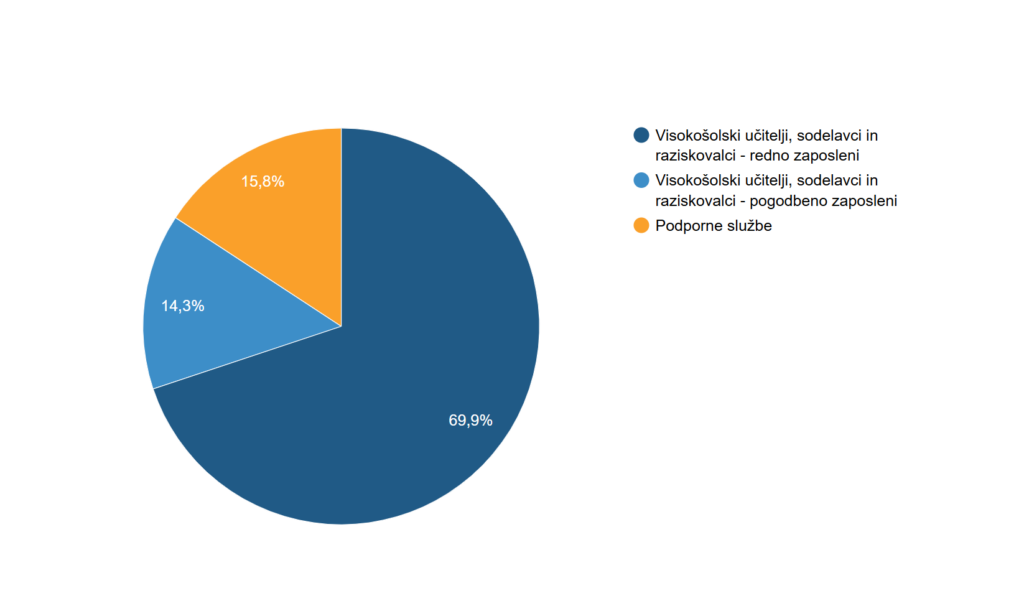
| Full-time | Part-time | Altogether | ||||
|---|---|---|---|---|---|---|
| all | of which foreign | all | of which foreign | all | of which foreign | |
| Teaching and research staff | 195 (108,02 FTE) | 63 | 40 | 3 | 235 | 66 |
| Administrative staff | 44 (30,55 FTE) | - | - | - | 44 | - |
| Total | 239 | 63 | 40 | 3 | 279 | 66 (23,7%) |
Gender Statistics
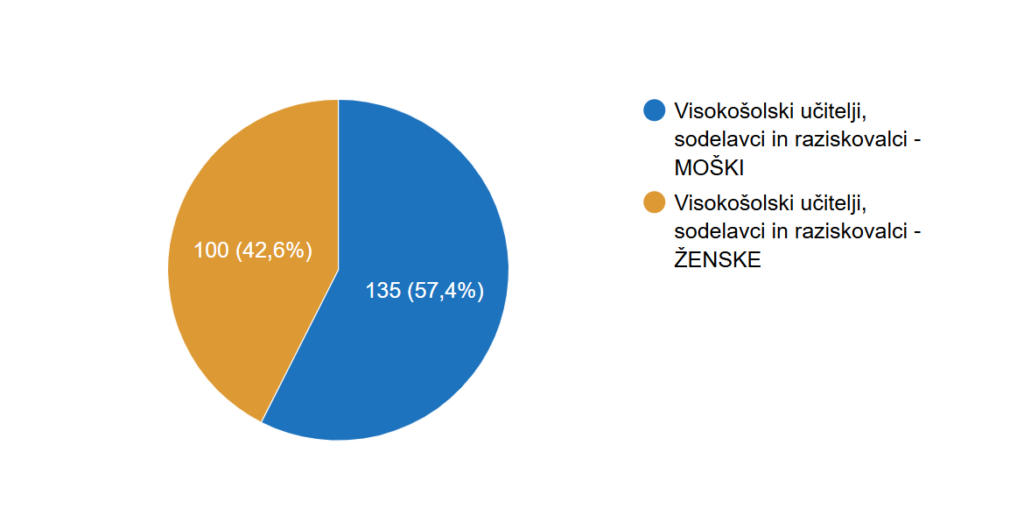
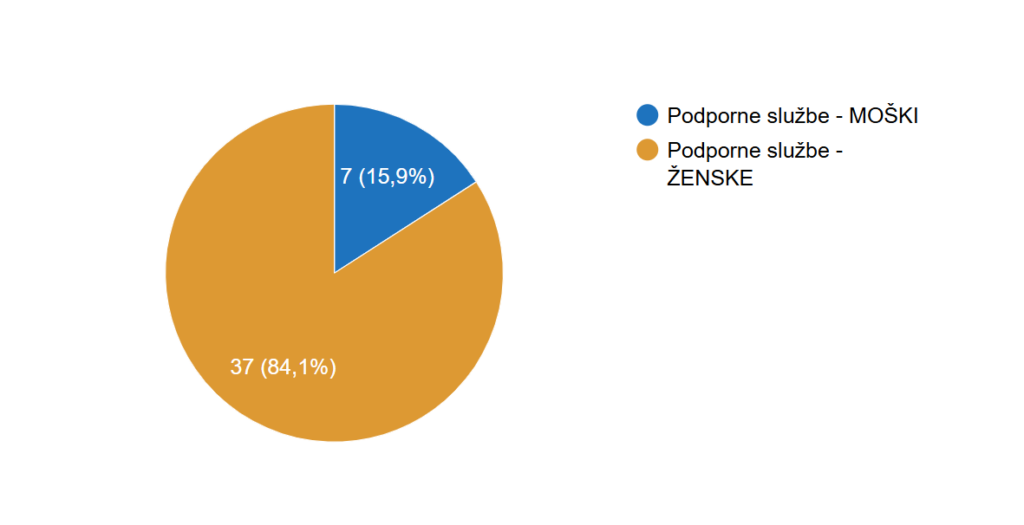
Age structure of personnel
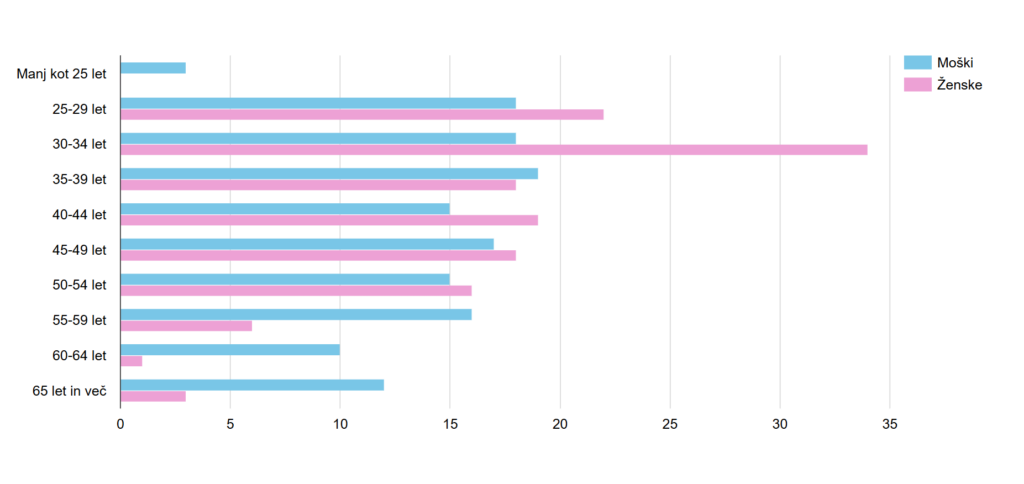
| Age | Male | Female | SUM |
|---|---|---|---|
| less than 25 | 3 | 0 | 3 |
| 25-29 | 18 | 22 | 40 |
| 30-34 | 18 | 34 | 52 |
| 35-39 | 19 | 18 | 37 |
| 40-44 | 15 | 19 | 34 |
| 45-49 | 17 | 18 | 35 |
| 50-54 | 15 | 16 | 31 |
| 55-59 | 15 | 6 | 21 |
| 60-64 | 10 | 1 | 11 |
| 65 and more | 12 | 3 | 15 |
| Sum | 142 | 137 | 279 |
Financial Information (Fiscal Year 2024)
| Funding Source | EUR |
|---|---|
| The MVZI - education funds | 6.107.540 |
| The ARIS - research activity funds | 1.774.339 |
| Other budgetary sources (other ministries and budgets of local communities) | 103.609 |
| State budget funds from the EU budget | 257.664 |
| Other EU funds: FP7, Cmepius and other EU budget projects | 677.542 |
| University's price list for services | 241.786 |
| Other funds | 89.134 |
| Funds acquired from the sale of merchandise | 27.508 |
| SUM in 2025 | 9.279.122 |
Pomembni dosežki v letu 2025
Dosežki zaposlenih in študentov
- Med letošnjimi prejemniki Zoisovih nagrad in priznanj smo imeli kar dva zaposlena na UP FAMNIT, in sicer Prof. dr. Tomaž Pisanski , prejemnik Zoisove nagrade za za življenjsko delo na področju diskretne matematike in izr. Prof. dr. Urban Bren prejmenik Zoisovega priznanja za priznanje za pomembne dosežke na področju biomolekularnih simulacij.
- V najobsežnejši globalni analizi genske raznolikosti doslej je mednarodna ekipa znanstvenikov ugotovila, da se genska raznolikost po vsem svetu zmanjšuje, vendar nekateri naravovarstveni ukrepi vseeno pomagajo pri ohranjanju vrst. Prelomno študijo, objavljena v vrhunski znanstveni reviji Nature, je vodila izr. prof. Catherine Grueber s Šole za življenjske in okoljske znanosti (School of Life and Environmental Sciences) ter ekipa raziskovalcev iz različnih držav. Pri raziskavi je sodelovala tudi prof. dr. Elena Bužan z Oddelka za biodiverziteto na UP FAMNIT.
- Mednarodna raziskava, v kateri je poleg 30 raziskovalcev v okviru akcije COST Alien CSI sodelovala tudi doc. dr. Živa Fišer, je prvič pokazala, da občanska znanost igra ključno vlogo pri zgodnjem odkrivanju invazivnih tujerodnih vrst. V raziskavi, objavljeni tudi v reviji People and Nature, so analizirali 600 uradnih poročil iz 30 držav in jih primerjali z več kot 220 milijoni zapisov z javnih platform. Gre za prvo študijo, ki dejansko meri vpliv občanske znanosti na zgodnje odkrivanje invazivnih tujerodnih vrst.
- V soboto, 22. 2., se je ob 100. obletnici rojstva legendarnega slovenskega animatorja, ilustratorja, striparja, kiparja, novinarja in filmskega režiserja Mikija Mustra (1925–2018), v Slovenski kinoteki, predvajal kratki animirani film z naslovom »Skok v prihodnost«, v katerem sta pri nastanku sodelovala tudi raziskovalca z Oddelka za informacijske znanosti in tehnologije UP FAMNIT: izr. prof. dr. Klen Čopič Pucihar je sodeloval kot koproducent in administrator sistema za zajemanje gibanja, asist. dr. Anuradhi Maheshya W. Weerasinghe Arachchillage pa kot asistentka za zajem gibanja.
- Na Mednarodna skupina raziskovalcev iz Črne gore, Francije, Hrvaške, Kitajske, Slovenije in Španije je objavila odkritje in opis novega rastlinskega rodu in vrste – Petrolamium crnojevicii Dragićević, Vuksanović & Surina – iz težko dostopnega območja Črne gore. Pri raziskavi sta sodelovala tudi sodelavca Oddelka za biodiverziteto UP FAMNIT, izr. prof. dr. Boštjan Surina kot vodja raziskave in doc. dr. Peter Glasnović. Sodobne molekularno-genetske, citogenetske ter klasične metode so jasno opredelile filogenetski položaj in evolucijsko zgodovino novega taksonaNa Slovenija je bila uspešna na evropskem razpisu za pridobitev visoko zmogljivega superračunalnika. Pri tem je dosegla največ točk med prijavitelji, projekt pa je bil deležen številnih pohval. V imenu Univerze na Primorskem sta pri pripravi projekta sodelovala zaposlena na UP IAM in UP FAMNIT, izr. prof. dr. Jernej Vičič in doc. dr. Aleksandar Tošič.
- Tako vsako leto poteka Teden UP, znotraj njega pa vedno Slavnostna akademija, na kateri UP podeli nagrade vsem, ki so s svojim delom ali aktivnostmi prispevali k ugledu, razvoju in uspehu univerze.
- Raziskovalci z UP FAMNIT so prejeli nagrado za najboljši članek na 30. letni konferenci ACM o inteligentnih uporabniških vmesnikih (ACM IUI 2025), ki je potekala od 24. do 27. marca v Cagliariju v Italiji. Pri članku je sodelovalo 12 avtorjev, z UP FAMNIT asist. dr. Nuwan T. Attygalle, izr. prof. dr. Matjaž Kljun, izr. prof. dr. Klen Čopič Pucihar in doc. dr. Maheshya Weerasinghe.
- V četrtek, 17. aprila 2025 , je bil dan za praznovanje – na slovesnem srečanju alumnov UP so bila namreč že drugo leto zapored podeljena priznanja in nagrade tistim, ki s svojim delovanjem podpirajo delovanje Alumni UP ter širijo dober glas o univerzi. S ponosom predstavljamo tudi našo nagrajenko: Dr. Nino Krohne, Alumni UP FAMNIT.
- Dr. Ana Slavec, docentka na UP FAMNIT in raziskovalka na InnoRenew CoE, se je udeležila 32. Dnevov slovenske informatike, ki so potekali 15. in 16. aprila 2025 v Portorožu pod osrednjo temo »Digitalna prihodnost za vse«. Na dogodku je predsedovala komisiji nagradnega Arnesovega HackathON-a, ki je izbrala tri najboljše študentske ekipe, ki so tekmovale v ustvarjanju rešitev za realne svetovne izzive.
- Raziskovalki Oddelka za aplikativno naravoslovje UP FAMNIT sta se med 6. in 8. majem 2025 udeležili 11. mednarodnega mediteranskega simpozija o zdravilnih in aromatičnih rastlinah (MESMAP), ki je potekal v sklopu mednarodnega sejma za sadje in zelenjavo MACFRUT 2025, v Riminiju, Italija. Izvedena je bila tudi posebna razstava posvečena začimbam, zdravilnim in aromatičnim rastlinam ter mednarodni simpozij MESMAP, na katerem sta raziskave mediteranske rastline laški smilj s plakatom predstavili doc. dr. Alenka Baruca Arbeiter in Petra Gabrovšek.
- Slovenska znanstvena fundacija vsako leto podeljuje priznanja Prometej znanosti za odličnost v komuniciranju znanosti, ki predstavlja najvišje in edino slovensko priznanje za tiste, ki se odlikujejo v komuniciranju znanosti z različnimi javnostmi, še zlasti s splošno javnostjo. Na letošnji podelitvi, ki je potekala 17. 6. 2025 na SAZU, so bili prejemniki z UP kar trije – dva posameznika in skupina treh partnerjev za izvedbo skupnega projekta.. Priznanja je tako prejeli: dr. Peter Glasnović (UP FAMNIT) Priznanje Prometej znanosti za vzorno donatorstvo pa je prejel prof. dr. Andrej Brodnik (UP FAMNIT).
- Prof. dr. Elena Bužan je vodilna prva avtorica v novi publikaciji v prestižni reviji Molecular Ecology. Glavno sporočilo članka je, da mora znanstvena skupnost – če želi v celoti izkoristiti potencial genomike pri varstvu biotske raznovrstnosti – razviti in sprejeti usklajene standarde, oblikovane ob upoštevanju potreb deležnikov. Kot vodilna prva avtorica je sodelovala prof. dr. Elena Bužan iz Skupine za molekularno ekologijo z Oddelka za biodiverziteto UP FAMNIT.
- Nova raziskava z Oddelka za biodiverziteto v soavtorstvu Žive Fišer in Andrea Pieronija z Univerze za gastronomske znanosti v Pollenzu (Italija). Raziskovalca sta proučevala trenutno stanje nabiralništva v Sloveniji in odkrivala, kako se danes prenaša znanje o uporabnih divjih rastlinah. Preko intervjujev z izkušenimi učitelji, ki prenašajo nabiralniško znanje, sta skušala razumeti njihove motive, pristope k izobraževanju in njihovo vlogo pri preprečevanju škodljivih praks.
- Nova študija z Oddelka za biodiverziteto, v vodstvu izr. prof. Jureta Jugovica in v sodelovanju z doc. dr. Martina Lužnik, razkriva, kako prisotnost invazivne zlate ribice (Carassius auratus) vpliva na kačje pastirje v submediteranskih kalih.
- Prof. Dr. Marko Tkalčič, UP FAMNIT IN UP IAM je prejel Zlato plaketo UP za leto 2024
- Prof. dr. Diego de Leo, UP FAMNIT in UP IAM;cs je prejel Nagrado za znanstveno odličnost Univerze na Primorskem
- Andrej Milisavljevićin Niki HOrvatin sta prejela Nagrado Srečko Kosovel
- Gabriela Laznik Zalaznik je prejela Priznanje za študente Univerze na Primorskem
- Raziskovalna ekipa z Oddelka za biodiverziteto v vodstvu izr. prof. Jure Jugovic, z izr. prof. Vladimir Ivović,doc. dr. Anka Kuhelj in asist. Alenka Babič so prvič v Sloveniji preučili vpliv usmerjenosti pobočij na razširjenost klopa Ixodes ricinus na gori Slavnik.
- Prof. dr. Marko Tkalčič in asist. Arsen Matej Golubovikj z Oddelka za informacijske znanosti in tehnologije na UP FAMNIT sta soavtorja mednarodne raziskave Soundtracks of Our Lives: How Age Influences Musical Preferences, pri kateri sta sodelovala še raziskovalca izr. prof. dr. Bruce Ferwerda z Univerze Jönköping in izr. prof. dr. Alan Said z Univerze v Göteborgu.
- UP FAMNIT je na pobudo Oddelka za biodiverziteto sklenila krovni sporazum o sodelovanju z Nacionalnim raziskovalnim inštitutom za Pantanal (INPP) iz Brazilije. Sporazum odpira nove možnosti za skupne raziskovalne projekte, izmenjave študentov in pedagoškega osebja ter utrjuje že vzpostavljeno sodelovanje z Universidade Federal de Mato Grosso (UFMT).
- Več informacij:
- Podeljene Zoisove nagrade
- Prelomna študija: Spodbudni znaki sredi splošnega upada genske raznolikosti
- Občanska znanost igra pomembno vlogo pri zgodnjem odkrivanju invazivnih tujerodnih vrst
- Animirani film »Skok v prihodnost« predvajan ob 100. obletnici Mikija Mustra
- Botanična raziskovanja sodelavcev Oddelka za biodiverziteto pripeljala do odkritja novega rastlinskega rodu in vrste
- UP kot del konzorcija uspešna pri pridobitvi superračunalnika
- 22. Slavnostna akademija UP
- Raziskovalci UP FAMNIT za inovativno raziskavo o učenju besedišča prejeli nagrado za najboljši članek na ACM IUI 2025
- MeetUP – Vrhunec tedna Alumni UP s podelitvijo nagrad
- Dr. Ana Slavec predsedovala komisiji nagradnega Arnesovega HackathONa na Dnevih Slovenske Informatike;
- Raziskovalki UP FAMNIT predstavili raziskave o laškem smilju na mednarodnem simpoziju MESMAP v Riminiju
- Dr. Peter Glasnović prejemnik priznanja Prometej znanosti
- Prof. dr. Elena Bužan vodilna prva avtorica v novi publikaciji v prestižni reviji Molecular Ecology
- Razvoj naravnega terapevtskega izdelka iz laškega smilja za nego kože pri starostnikih
- Sklenjen krovni sporazum o sodelovanju med UP FAMNIT in Nacionalnim raziskovalnim inštitutom za Pantanal (INPP)
- Marca so raziskovalci z UP FAMNIT prejeli nagrado za najboljši članek na 30. letni konferenci ACM o inteligentnih uporabniških vmesnikih (ACM IUI 2025), ki je potekala od 24. do 27. marca v Cagliariju v Italiji. To prestižno priznanje nagrajuje prelomne raziskave na področju inteligentnih uporabniških vmesnikov in izpostavlja delo, ki bo pomembno vplivalo na prihodnost računalništva.
- Prof. dr. Vita Poštuvan, namestnica predstojnika Slovenskega centra za raziskovanje
Leadership
- Dean: Prof. Ademir Hujdurović, PhD
Vice-Dean for Science and Research: Prof. Marko Orel, PhD
Vice-Dean for Education: Prof. Dunja Bandelj, PhD
Vice-Dean for Quality Assurance: Prof. Elena Bužan, PhD
- Department of Mathematics: Prof. Bojan Kuzma, PhD
- Department of Information Sciences and Technologies: Prof. Tomaž Pisanski, PhD
- Department of Biodiversity: Assist. Prof. Živa Fišer, PhD
- Department of Applied Natural Sciences: Prof. Dunja Bandelj, PhD
- Department of Psychology: Assit. Prof. Tina Podlogar, PhD
- Faculty’s General Secretary: Nataša Vraneš
Contact
University of Primorska
Faculty of Mathematics, Natural Sciences and Information Technologies
Glagoljaška 8
SI-6000 Koper, Slovenia
Phone: + 386 (5) 611 75 70 (Secretariat)
Phone:+ 386 (5) 611 75 75 (Student Services)
Fax: + 386 (5) 611 75 71
Updated: 9. 12. 2025